‘US defense pact gives terror-sponsoring Qatar an insurance policy’

Noa Lazimi: The importance of this step must be understood against the backdrop of Qatar’s considerable investment in recent years in the modernization of its air force, as part of a comprehensive policy to strengthen its military capabilities.

“According to an in-depth monitoring report by MEMRI [Middle East Media Research Institute], about a decade ago, Doha’s air fleet consisted of only 12 fighter jets in total (of which 9 were operational). Today, following an accelerated strategy of armament, the fleet has been dramatically expanded due to purchases from the U.S. and a number of European countries.”

This expansion is not just in hardware but also in operational know-how, with Qatar gaining experience through multinational joint exercises, including air training with hostile countries like Turkey and Pakistan.

“This raises the fear that Qatar will serve as a bridge for transferring advanced Western technologies and tactics to elements hostile to Israel, such as Iran, Turkey, Pakistan, and others.

The full interview was published in JNS on October 17, 2025.
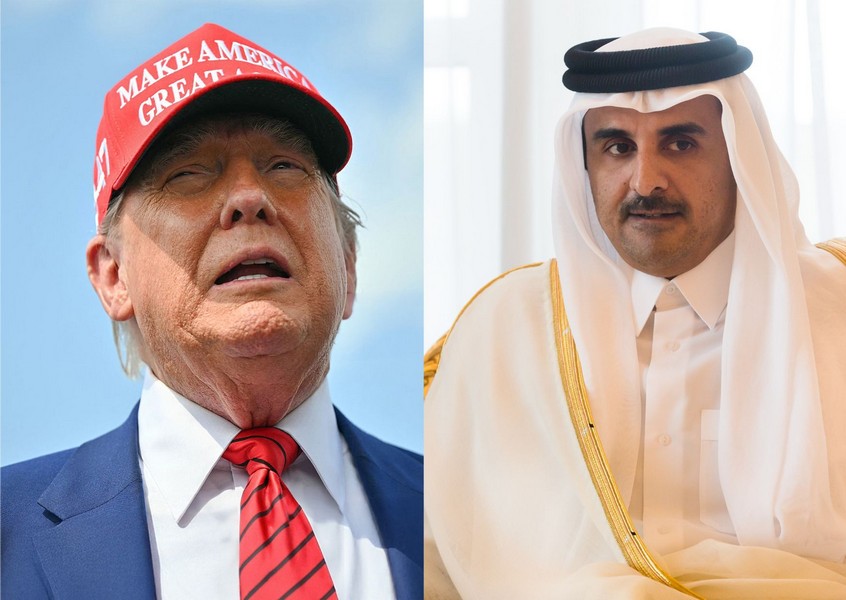
‘US defense pact gives terror-sponsoring Qatar an insurance policy’ shutterstock - Brian Jason, Drop of Light


Hamas Exploits Hostages’ Bodies to Pressure Israel

Prof. Kobi Michael discusses the severe challenges Israel faces in recovering the bodies of dead hostages, arguing that difficulties arise from geographical changes in Gaza and the manipulative actions of Hamas, which admitted access to bodies but uses them to create psychological pressure on Israeli society. He believes Israel possesses good intelligence regarding Hamas’s capacity and will use leverages and pressure from mediators to hold the organization accountable for the unrecovered bodies. Michael asserts that the war is still only in Phase One, expressing skepticism that Phase Two (disarming Hamas) will succeed because Hamas is actively reconstituting itself, recruiting thousands of militants, and demonstrating no intention to move towards demilitarization.

The full interview took place on ILTV on October 15, 2025.


Indonesia Ties and Regional Coordination Key to Israel’s Future Stability

Asher Fredman said that a visit of Indonesia’s president to Israel would be highly significant, highlighting Indonesia’s importance as a major Muslim and Asian power and U.S. ally, with great potential for cooperation in technology, agriculture, and critical minerals. He urged expanding the Abraham Accords amid current diplomatic momentum. Fredman warned that Hamas is regaining control in Gaza and that the Palestinian Authority is unlikely to meet the peace plan’s conditions. He stressed that any Gaza reconstruction efforts must be closely coordinated with Israel.

The interview took place on Channel I24 on October 13, 2025.

https://youtu.be/yjy4ObtHG-0


Military Pressure and U.S.–Israel Coordination Made the ‘Impossible’ Possible

Asher Fredman discusses a historic day, crediting President Trump, his team, Prime Minister Netanyahu, and the IDF’s military pressure for achieving the “impossible” and securing the release of hostages. He emphasizes that crucial Israeli military pressure—including entering Gaza City and striking Doha—and close coordination between the United States and Israel were necessary to force Hamas to release the hostages and signal that the conflict must conclude.

The interview took place on Fox News, on October 13, 2025.


How Washington and the Gulf cleared a path to a fragile Gaza truce

Meir Ben Shabbat: It is a combination of the Israeli military operation in Gaza, the attack in Qatar, Trump’s desire to implement his grand vision for the Middle East, and Israel’s feeling that it has achieved a large part of what it set out to achieve.

Israel has to explain to its enemies and all the other players through actions that the rules of the game have changed. Israel had to show initiative, determination, and a willingness to take heavy risks in facing all of its enemies anywhere in the world.

The UAE foreign policy is one that seeks to have a mitigating effect on regional conflicts. It is no secret that the war in Gaza brought pressure in terms of public opinion, and the end of the war should have a positive effect on this.

There is no doubt that there is burnout after two years of an intense multi-front war. But out of all the fronts, the one in Gaza proved that the army, the reservists, and the Israeli homefront are capable of withstanding a long war.

Published in The Jerusalem Post, October 10, 2025.

How Washington and the Gulf cleared a path to a fragile Gaza truce shutterstock - Saku_rata160520


President Trump’s vision of regional integration and expanding the Abraham Accords is “critical” for Israel

Asher Fredman emphasized that President Trump’s vision of regional integration and expanding the Abraham Accords is “critical” for Israel, the region, and the Palestinians. He sees this regional cooperation—building an “axis of peace” with moderate Middle Eastern countries—as vital for American security and economic interests.

The full interview took place on Fox News, on October 7, 2025.

https://youtu.be/fn5Oln_Bl9o


The Gaza War and the West’s Moral Confusion

Prof. Kobi Michael: Ultimately, this entire situation is an indication of the problem of the West much more than the problem of Israel.

Furthermore, the increase in antisemitism is observed, but it is argued that it is not connected directly to the Israeli response, but rather to the inherent problems within Western society and mainly the Western leadership, particularly that coming from the left.

Antisemitism was always present, sometimes hidden and implicit, and the situation is compounded by a ‘bizarre and very dangerous green-red coalition’ between the progressives and the ultra-radical Muslims.
Leaders who believe that appeasing this constituency while criticizing Israel will lead to safety and security in their own countries are incorrect.

The full interview took place on W Radio Colombia on October 7, 2025.


Israel Defends, Qatar Destabilizes

Ruth Wasserman Lande rejects the notion that Israel is an aggressor, arguing it is a small country that only responds to attacks, as demonstrated by the unprovoked massacre and kidnapping of its citizens on October 7th. She accuses Qatar of playing a “double game” by fueling regional instability while posturing as a mediator, noting that other Gulf states like Saudi Arabia have “zero trust” in Qatar for this reason. She draws a sharp distinction between Qatar and countries like Saudi Arabia, which, unlike Qatar, do not harbor terrorist leaders from Hamas or the Muslim Brotherhood who call for the murder of Israeli civilians. Finally, she asserts that Israel has no intention of harming Gazan civilians and that the IDF actively tries to secure their evacuation from combat zones.

The interview took place in Al Arabiya, on September 29, 2025.


Trump’s vow to block occupied West Bank annexation ‘co-ordinated with Israel’

Prof. Kobi Michael: Netanyahu understands that annexation now would be problematic for the substantial and essential national interest of Israel and this is a very comfortable way to deal with the extreme wing or right wing of his coalition when it comes from Trump.

Published in The National News, September 26, 2025.

Trump's vow to block occupied West Bank annexation 'co-ordinated with Israel' shutterstock - noamgalai


The Abraham Accords will serve us to rebuild regional ties after the war

Asher Fredman: The Abraham Accords were an outpouring of cooperation on every level — the diplomatic level, the people-to-people level, the economic level, literally in almost every field imaginable. 

If we want a better future in the region, we have no choice but to rebuild. The ties that have been built in the Abraham Accords hopefully will serve all of us as we do the hard work of beginning to rebuild the ties following the war in Gaza.

The full interview was published in The Media Line, on September 16, 2025.

The Abraham Accords will serve us to rebuild regional ties after the war