View from Israel: Q&A with Meir Ben Shabbat

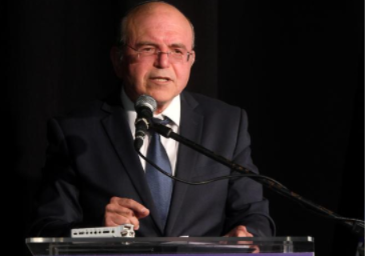
Meir Ben Shabbat: To be frank, as long as the regime in Iran does not change, any achievement against it will be temporary. This is because the regime will never abandon its ambitions to realize its vision: establishing Iranian hegemony across the entire region, weakening American influence, and dealing with the “Little Satan.” It will funnel whatever resources it manages to secure—under the auspices of one diplomatic agreement or another—into obtaining nuclear military capability, a massive ballistic missile array, and proxy networks. The Iranian regime is not limited by terms in office, nor is it subject to electoral constraints. It views things through a long-term lens. If Trump is currently in its way, it will, at most, keep a low profile for a while, only to rush back to its plans once he is gone. The West struggles to grasp this mindset because it is accustomed to a democratic political culture.

The full interview was published in the Jerusalem Strategic Tribune on July 24, 2026.

*The opinions expressed in Misgav publications are the authors’ alone.
View from Israel: Q&A with Meir Ben Shabbat


John Keith King Cautions Against Ground Front: Eyes on Kurds, Kharg Island and Kuwait

Prof. Kobi Michael: The Kurds might play a role, but it depends on the developments. Many Kurds are interested in achieving increased autonomy. Broader internal front could eventually emerge even without a single, centrally coordinated military operation. But any attempt to introduce Kurdish armed groups into the confrontation would immediately affect relations with Turkey.

Turkish opposition would be substantial but Ankara would not necessarily be able to prevent Kurdish groups from acting if they believed the regional conflict had created a historic opportunity.

The full interview was published on The Media Line on July 23, 2026.

John Keith King Cautions Against Ground Front: Eyes on Kurds, Kharg Island and Kuwait shutterstock - Jose HERNANDEZ Camera 51


Saudi Nuclear Agreement Leaves Israel Exposed

Prof. Kobi Michael: Israel should answer the reported deal with a diplomatic initiative rather than rely only on private objections in Washington.

Such steps, he said, could give Saudi leaders political cover to return to normalization talks and restore a broader bargain in which nuclear cooperation was linked to regional diplomacy. “Israel cannot remain in its position, do nothing and expect that everything will remain in place. There is no such thing as an ongoing status quo.

Israel could accept Saudi-operated reactors using fuel supplied from abroad. “They can help the Saudis to build the civilian reactors. But not to enable enrichment on Saudi soil.

Published in The Media Line, July 23, 2026.

*The opinions expressed in Misgav publications are the authors’ alone.
Saudi Nuclear Agreement Leaves Israel Exposed shutterstock - Enes Solmaz


Turkey’s rising regional ambitions put Israel on alert

Prof. Kobi Michael: Israel has found itself in a reality in which it cannot translate its military achievements into a strategic outcome, meaning the shaping of a new regional architecture. The limbo was created by the Americans entering negotiations with the Iranians while completely misunderstanding who the Iranians are. It was clear that there was no realistic possibility of bridging the gaps between the two sides and that the Iranians were merely using the time to rebuild their capabilities, because they have not abandoned the axis as a strategic concept or their goal of eliminating Israel.

Hezbollah is the crown jewel of that axis. That is why the Iranians demanded that the ceasefire with the US be linked to a ceasefire in Lebanon, in order to preserve Hezbollah as their most important strategic asset. This also sends a message to all the other proxies that have been severely weakened in Syria, Iraq, Gaza and Yemen: Iran will come to their aid, just as it is doing for Hezbollah. It is therefore already possible to identify clearly their desire to rebuild the ring of fire around us. As long as this regime exists, there is no chance that Iran will change its ways.

Published in  Israel Hayom, July 21, 2026.

*The opinions expressed in Misgav publications are the authors’ alone.
האיום הטורקי: השאיפות, הרטוריקה והמהלכים שלא נותנים מנוח לישראל shutterstock - tolga ildun


Israel on ‘high alert’ ahead of possible Iran campaign

Dr. Yossi Mansharof: The level of the threat from Iran is extremely high.

The regime’s capabilities should not be underestimated, as the Houthis’ capabilities initially were. “Their technological capabilities improve as the years pass. They are not standing still, and that has to be taken into account.

If this device, the ‘fiber drone,’ is in Hezbollah’s possession, it is probably held by the entire axis, particularly along the Jordanian border. The defense establishment therefore needs to maintain heightened vigilance.

The full interview was published in Israel Hayom, on July 19, 2026.

*The opinions expressed in Misgav publications are the authors’ alone.
"דריכות גבוהה" בישראל לקראת מערכה מול איראן – חשש לשיבושי טיסות shutterstock - Selman GEDIK


The Revolutionary Logic of the Iranian Regime

Dr. Raphael Ben Levi analyzes the strategic conflict between Israel, the United States, and Iran, arguing that the Iranian regime utilizes diplomacy only as a tactical tool to advance its revolutionary goals and regional dominance.

He also discusses the shift toward military force and “maximum pressure” to degrade Iran’s nuclear aspirations and missile threats, particularly as diplomatic efforts have failed to achieve a genuine state of coexistence.

The full interview was conducted by IANS on July 16, 2026.

*The opinions expressed in Misgav publications are the authors’ alone.
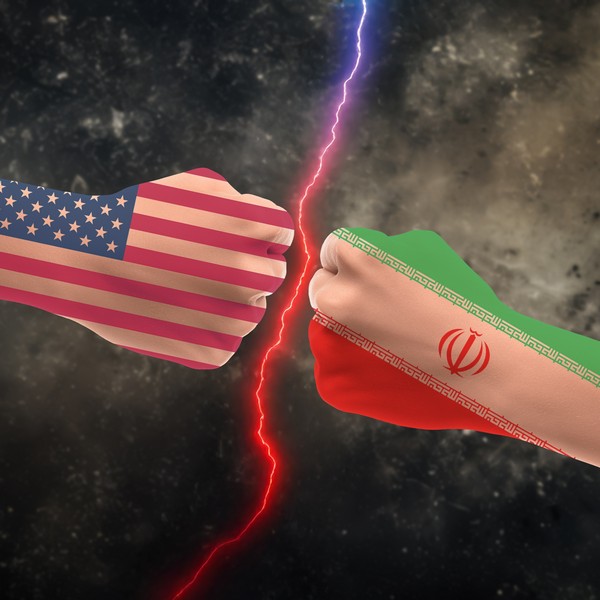


A New Stage in the US-Iran Conflict

Dr. Adi Schwarz discusses the escalating conflict between the US and Iran, characterizing the Iranian regime as a fundamentalist revolutionary force that destabilises the Middle East through its proxies and pursuit of nuclear weapons.

He highlights a “new stage” in the conflict where US military strikes are now targeting Iranian civilian and dual-use infrastructure, such as bridges and ports, rather than just military sites.

Ultimately, Schwarz argues that a genuine peace deal is unlikely because the regime only seeks to gain time, and he maintains that the only definitive solution for regional stability is the downfall of the Iranian regime.

The full interview aired on Fox News on July 18, 2026.

*The opinions expressed in Misgav publications are the authors’ alone.


Negotiating by Fire

Prof. Kobi Michael describes the current tensions between Iran and the United States as “negotiating by fire,” warning that continued Iranian attacks on regional American facilities could lead to a broader military campaign.

He also analyzes the Lebanese president’s meeting with President Trump as a crucial opportunity to dismantle Hezbollah and establish effective sovereignty for Lebanon while disconnecting the country from Iranian control.

The full interview took place on NewsX World on July 18, 2026.

*The opinions expressed in Misgav publications are the authors’ alone.


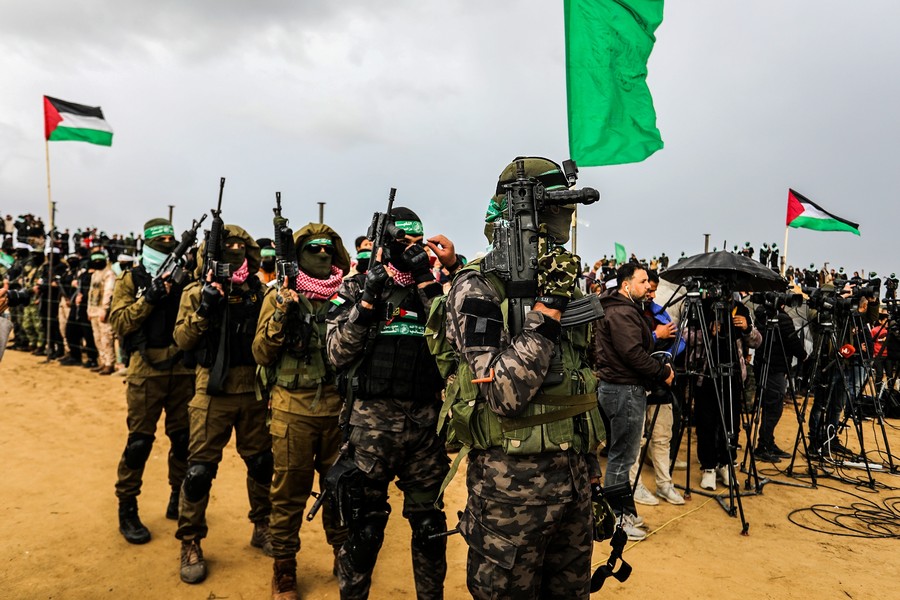
Hamas is trying to replicate Hezbollah’s model

Meir Ben Shabbat: I think Tehran, more than anyone else, is helping President Trump understand who he is dealing with. The month that has passed since the ‘memorandum of understandings’ was signed has helped dispel the optimism its architects tried to create. The Iranians have made clear that they will not back down from their position regarding the Strait of Hormuz. ‘The Strait of Hormuz belongs to Iran for historical and geographical reasons. This waterway will never return to what it was before the war,’ Ali Akbar Velayati, senior adviser to the Supreme Leader, declared. Similar messages have been delivered by numerous Iranian officials.

The insistence on dictating the conditions for reopening the Strait of Hormuz, the maneuvering in negotiations, and the growing calls to eliminate Trump leave the American president with no alternative but military and economic pressure. Trump still prefers a bad agreement to a successful war, but he cannot surrender on the one issue that represented his only achievement in the ‘memorandum of understandings.’ He knows that capitulating to Iranian demands would not only embarrass him but would fail to resolve the crisis and would merely increase the appetite of the extremist regime. If this is how matters stand regarding the temporary memorandum, one can only imagine what negotiations over the far more complex nuclear issues will look like.

Published in Arutz 7, July 17, 2026.

*The opinions expressed in Misgav publications are the authors’ alone.

חמאס מנסה להעתיק את מודל חיזבאללה, צריך לפגוע בו חזק יותר shutterstock - Anas-Mohammed


The Mossad-CIA Iran Plot and the Trump Factor

Prof. Kobi Michael discusses a reported Mossad and CIA plan for regime change in Iran involving Mahmoud Ahmadinejad, emphasizing that the success of such operations or future U.S. strikes depends heavily on President Trump’s decisions.

He also analyzes the potential for Iranian retaliation against Israel, asserting that Israel would respond aggressively to any direct attack and remains in close coordination with the U.S. regarding regional threats like Hezbollah.

The full interview took place on ILTV on July 14, 2026.

*The opinions expressed in Misgav publications are the authors’ alone.