Iran’s supreme leader Mojtaba Khamenei ‘misfunctioning,’ not controlling regime

Prof. Kobi Michael: This is not a new phase, but a continuing effort and a very successful and impressive one and a crucial component of the strategy meant to weaken the Iranian regime. This is to the degree that it will not be able to reconstitute itself and/or to become again a severe threat and destabilizing player in the broader Middle East.

At the very same time, by weakening the regime and paralyzing its capacities generally speaking and its domestic control specifically, the U.S. and Israel are facilitating the required conditions for the Iranian people to topple the regime.

Published in Fox News, March  18, 2026.

*The opinions expressed in Misgav publications are the authors’ alone.
Iran’s supreme leader Mojtaba Khamenei ‘misfunctioning,’ not controlling regime shutterstock - Mo Photography Berlin


Defining some communities as safe could encourage Iran to target them

Defining some communities as safe could encourage Iran to target them

Meir Ben Shabbat: Defining some communities as safe could encourage Iran to target them. Easing restrictions anywhere could be misinterpreted by the public as a lowering of the threat level everywhere, eroding preparedness.


Published in the New York Times, on March 16, 2026.

*The opinions expressed in Misgav publications are the authors’ alone.


Strategic Patience and the Toppling of the Iranian Regime

Prof. Kobi Michael discusses the need for a prolonged military campaign to reduce the Iranian regime’s capabilities to their lowest point and the establishment of a robust monitoring mechanism to prevent it from reconstituting itself , . He envisions a weakened and fragile regime eventually collapsing from within due to an internal uprising by the Iranian people, supported by international efforts, though he emphasizes this goal requires strategic patience and time

The full interview took place on I24 Channel on March 15, 2026.

*The opinions expressed in Misgav publications are the authors’ alone.


A Divided Continent: Europe’s Fragmented Response to Iran

Olga Deutsch: Europe’s response to the conflict involving Iran is characterized by deep internal fragmentation, where individual nations prioritize domestic political interests, local demographic pressures, and their specific relationships with the United States over a unified European Union stance.

Regional differences further divide the continent, as Western Europe favors diplomatic “soft power” and UN frameworks to manage internal unrest, while Central and Eastern European nations perceive Iran as an existential threat and lean toward stronger alignment with NATO and US strategic goals.

The recording of briefing with Olga Deutsch, Video credit: MediaCentral. 12 March 2026.

*The opinions expressed in Misgav publications are the authors’ alone.


U.S.-Israel War on Iran Sets Middle East Ablaze

Prof. Kobi Michael: This is part of war, and unfortunately we have gotten used to it. The number of missiles Iran was firing at Israel appeared to be falling by the day, suggesting Tehran’s strike capacity was declining. No one is happy about this, but everyone understands we had no other choice.

Published in Caixin Global, March  10, 2026.

*The opinions expressed in Misgav publications are the authors’ alone.

U.S.-Israel War on Iran Sets Middle East Ablaze shutterstock - Ashraf adel32


If Iran weakens, so will Hamas and Hezbollah

If Iran weakens, so will Hamas and Hezbollah

Prof. Kobi Michael: If the campaign in Iran is ended successfully … Iran will be much weaker, and Iran will not be able to continue supporting Hamas and Hezbollah. Then it will change the entire situation in the Gaza Strip and in Lebanon dramatically.

When it comes to the Gaza Strip, actually, we are in a sort of status quo. The IDF continues on a daily basis to destroy all the terror infrastructure, tunnels, places that were used for manufacturing weapons and rockets. This is to signal to Hamas that if they continue breaching the agreement, they will pay a price.

The full interview was published in The Media Line, on March 10, 2026.

The opinions expressed in Misgav Institute publications are those of the authors alone.


Hezbollah, Iran unleash coordinated cluster bomb strikes on Israel in major escalation

Prof. Kobi Michael: Hezbollah has fully joined the war, and it looks like they are now very well coordinated with Iran. Most of Hezbollah’s rockets and drones are launched simultaneously with the Iranian missiles.

The Iranian use of cluster missiles and the idea that they deliberately target civilians and civil facilities must be considered as a use of non-conventional weapons, and the American-Israeli response must be appropriate.

Israel will no doubt take control over a wide territory in south Lebanon, from the international border to the Litani River, in order to establish a security buffer zone. This will prevent Hezbollah from attacking the Israeli villages and towns in the north of the country and will intensify the attacks against Hezbollah all over Lebanon.

Published in Fox News, March  10, 2026.

*The opinions expressed in Misgav publications are the authors’ alone.

Hezbollah, Iran unleash coordinated cluster bomb strikes on Israel in major escalation shutterstock - vblinov


Regional War Reshapes Political Landscape

Prof. Kobi Michael: I think that Israel perceives the event as a very historical opportunity to reshape the regional architecture in its entirety.

The Gulf countries are very hesitant when it comes to Iran because they don’t rely on the Americans. They are afraid that if they join the American-Israeli coalition now … the Americans will not finish the job, and then they will remain there with Iran, which is the wounded lion.

The accumulation of the damages that are caused to Iran is very significant. … Iran after the war … will not be Iran that we used to know.
The big question … is what is going to be on the day after. On the day that President Trump reaches the conclusion that he won the war … what will remain here in the region?

Published in The Media Line, March  10, 2026.

Regional War Reshapes Political Landscape shutterstock - macondofotografcisi


No potential daylight on Iran between Israel and the US

No potential daylight on Iran between Israel and the US

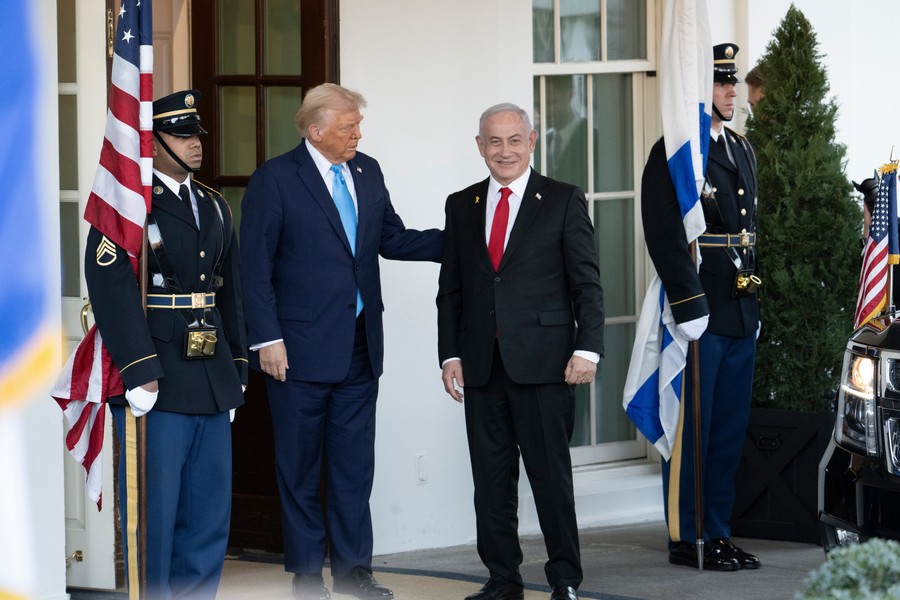
Dr. Raphael BenLevi: Having now openly called for an end to the nuclear and ballistic programmes and the support for proxies, it would be very difficult for him to accept a situation where those remain in place.

Theoretically, Israel might desire regime change more than the US, but at this point, I don’t see much potential daylight between the two. If you look at Trump’s policy on Iran over the years, including in his first term, he’s actually been remarkably consistent, in contrast to the way he talks to journalists about it.

The full interview was published in The Telehraph, on March 9, 2026.

The opinions expressed in Misgav Institute publications are those of the authors alone.


‘Hezbollah is isolated, weak and vulnerable’

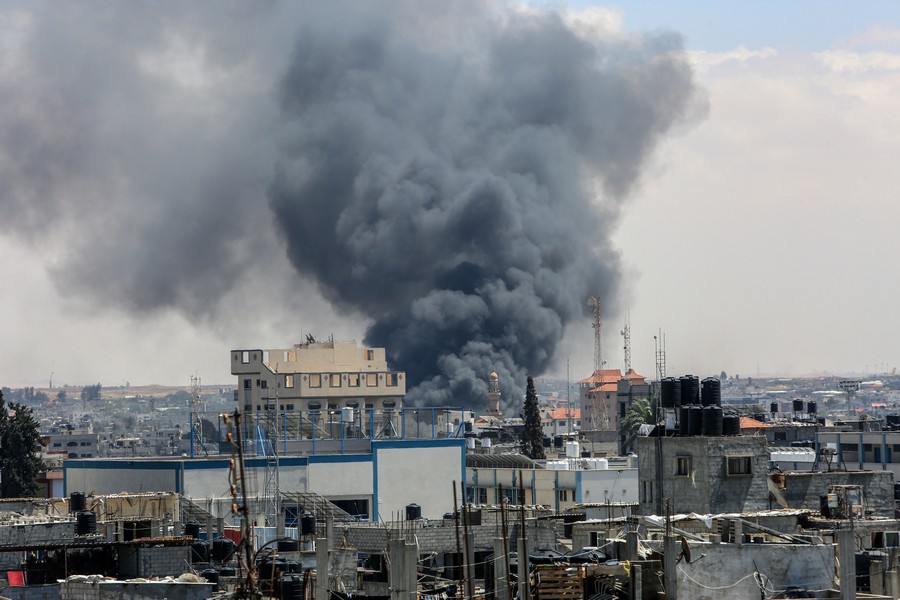
Col. (res.) Dr. Hanan Shai: Hezbollah found itself disconnected from its Iranian patron, which itself is fighting for its existence after severe blows in the war with Israel and the United States.

Thus, a situation was created in which the borders of Lebanon were essentially sealed from all sides: from the north and east by Syria, and from the south and west by Israel. In this reality, Lebanon becomes a closed arena—and Hezbollah finds itself isolated, weak and much more vulnerable than it was in the past.

The enemy, due to its mistakes that Israel exploits, is trapped in the arena it chose for himself. The destruction of homes used as military infrastructure by Hezbollah creates an irreversible reality of prolonged displacement for many evacuees.

The organization found itself disconnected from its Iranian patron, which itself is fighting for its existence after severe blows in the war with Israel and the United States.

Published in JNS, March  08, 2026.

*The opinions expressed in Misgav publications are the authors’ alone.

‘Hezbollah is isolated, weak and vulnerable’ shutterstock - Matej Sulc