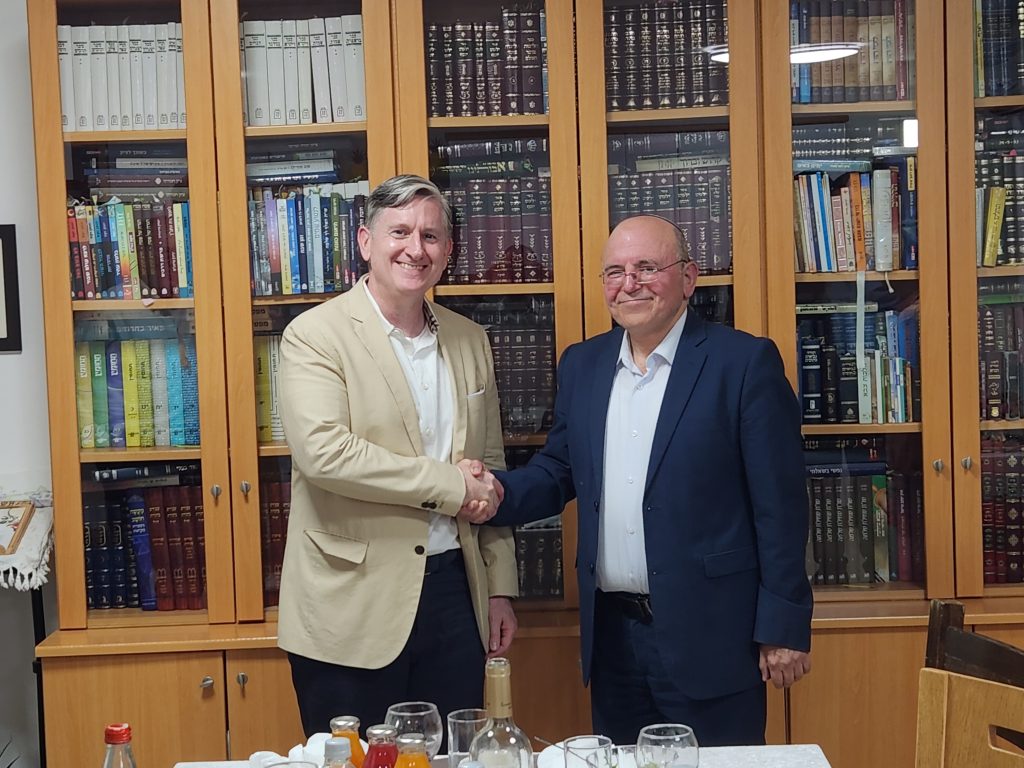
David Magerman joins the Misgav Institute’s International Advisory Council

David Magerman is the founder and president of the Tzemach David Foundation, where he leads initiatives that strengthen Israel through education and expand opportunities for American students to study and build their lives in Israel. His philanthropy supports transitional university programs, advances K–12 education reform, and includes strategic under-the-radar projects that bolster the development and resilience of the Land of Israel.

Before focusing his efforts on Israel, David founded the Kohelet Foundation, which played a transformative role in Jewish day school education in the United States. Professionally, he previously served as a pioneering computer scientist at Renaissance Technologies and is now Managing Partner at Differential Ventures. He co-founded the fund and has played a central role in guiding investments in deep-technology companies that power the data-driven economy.


Ariel Sterngold Joins International Advisory Board

Ariel Sterngold is an entrepreneur and business leader with a longstanding track record in developing and scaling innovative consumer and hospitality focused technologies. He brings extensive experience in product development, go-to-market strategy, and multi-unit operations, blending deep R&D experience with the ability to build strong commercial partnerships across sectors including retail, hospitality, corporate, and wellness environments.

He brings a practical, growth oriented perspective to organizational leadership and is known for bridging strategic thinking with hands on execution. His work emphasizes innovation, operational excellence, and creating solutions that deliver meaningful value to both businesses and end users.

Ariel is a member of the Board of Trustees of the Hebrew University of Jerusalem, has attended Harvard Business School Owner/President Management (OPM) program, and is actively involved with Succat Shalom, reflecting his deep commitment to education, leadership development, and community service.

He lives with his wife and four children in Jerusalem and is committed to balancing family, business, and service to the community.


David Hatchwell Altaras Joins International Advisory Board

David Hatchwell Altaras holds an MBA in International Business and Finance from New York University’s Stern School of Business and is a graduate of the School of Foreign Service at Georgetown University in Washington, D.C.

In his professional life, Mr. Hatchwell serves as Chairman of his family office, 3H, whose investments range from real estate to content production. He is also Chairman of 2H, a joint venture for the Spanish-speaking world with Hackman Capital, the leading studio production investment and management company in the world. Until June 2025, he served as Chairman of Excem Grupo, a diversified international family group founded by his late father, leading philanthropist and visionary Mauricio Hatchwell Toledano (Z”L).

From 1992 to 2000, David lived in Beijing, where he developed operations in China, achieving more than 20 projects across various sectors, including owning the rights to Real Madrid in Asia from 2003 to 2008. He also chairs a Real Estate Investment Trust, SITUR, which is a major hostel owner and operator in the Iberian Peninsula.

David Hatchwell has held several leadership roles in the global Jewish community. He served as President of the Jewish Community of Madrid from 2011 to 2017. He is currently a member of the Genesis Prize selection committee and serves on the Peres Center for Peace and Innovation International Board of Governors.

In 2015, Mr. Hatchwell co-founded the Fundación HispanoJudía, an NGO which he chairs. The foundation is dedicated to building a Hispanic Jewish Museum in Madrid, with the goal of fostering bridges of mutual understanding between the Spanish-speaking and Jewish worlds.

He has been a member of YPO (Young Presidents’ Organization) since 2005, where he has served on various committees and as Chair of the Madrid Chapter. He has been a member of the Board of the Universidad Politécnica de Madrid (UPM), Spain’s most prestigious technological university.

David Hatchwell is the executive producer and one of the anchor investors of Malinche the Musical, the No. 1 musical show in both Spain and Mexico, created by megastar Nacho Cano. The show celebrates diversity and the deep historical ties between Spain and Mexico. He is also a producer of several successful live shows (including Ibiza Paradise) and various documentaries on musical and historical themes.

Over the last 40 years, David and his family have contributed to numerous philanthropic projects in Israel, Spain, and China. He and his wife, Natalia, and their three children (Yavne, Dayan, and Magen) divide their time between Madrid and Jerusalem.


Brig. Gen. (res.) Effi Eitam

Former commander of the IDF’s Galilee Division. Served as leader of the National Religious Party in the Knesset and a member of the foreign affairs and defense committee, and as Minister of Housing and Minister of National Infrastructures in the Sharon governments, and a member of the security cabinet. Serves as a member of the “Nagel Committee” on Israel’s defense budget, appointed by the Prime Minister


Mr. Robert Greenway Joins the Misgav Institute for National Security’s International Advisory Council

Robert Greenway is the Director of the Allison Center for National Defense at The Heritage Foundation, where he is responsible for the development of policies which promote a strong national defense safeguarding American freedom and prosperity. He previously served as President and Executive Director of the Abraham Accords Peace Institute. Mr. Greenway has more than 30 years of experience in public service, culminating as the senior U.S. government official responsible for developing, coordinating and implementing U.S. government policy for all of the Middle East and North Africa on the National Security Council. Prior to service on the NSC, he served as a Senior Intelligence Officer at the Defense Intelligence Agency, and a combat veteran of the United States Army Special Forces. 

While Deputy Assistant to the President and Senior Director of the National Security Council’s Middle Eastern and North African Affairs Directorate, he planned and executed the United States’ most significant economic sanctions since the Cold War as part of a broad strategy for Iran. He was a principal architect of the historic Abraham Accords, the most significant diplomatic breakthrough in Middle East peace since 1994. He personally supervised the development of the first-ever presidentially approved strategies for Iran, Syria, Iraq, Libya, Lebanon and Israel, and was instrumental in the removal of the world’s most dangerous terrorist leaders. He coordinated the implementation of a comprehensive strategy to defeat ISIS, resulting in the liberation of the 20,000 square miles of territory it controlled, and the elimination of its leadership in Syria and Iraq. 

Before being assigned to the NSC he served at the Defense Intelligence Agency as a Senior Intelligence Officer in U.S. Central Command. Mr. Greenway retired from active duty prior to joining the DIA having commanded Special Forces units at every level from Team through Battalion. He holds a master’s degree with Honors from Webster University and a bachelor’s degree from the Virginia Military Institute.

רוברט גרינווי ומאיר בן שבת


Nobel Laureate Prof. Yisrael Aumann Joins the Misgav Institute’s International Advisory Council

Prof. Yisrael (Robert) Aumann joined the mathematics department at the Hebrew University of Jerusalem in 1956 and has been there ever since. In 1990, he was among the founders of the Center for the Study of Rationality at the Hebrew University, an interdisciplinary research center centered on game theory. He is the author of more than a hundred scientific papers and seven books, and has held visiting positions at Princeton, Yale, Berkeley, Louvain, Stanford, Stony Brook, and NYU.

In 2005, he was awarded the Nobel Memorial Prize in Economic Sciences.

Prof. Aumann was born in 1930 in Frankfurt am Main, Germany to a well-to-do Orthodox Jewish family. The family fled Nazi persecution and emigrated to the United States in 1938, settling in New York. In the process, his parents lost everything, but nevertheless gave their two children an excellent Jewish and general education. Aumann attended yeshiva elementary and high schools, obtained a bachelor’s degree from the City College of New York in 1950, and a Ph.D. in mathematics from MIT in 1955.

He is a member of the American Academy of Arts and Sciences, the National Academy of Sciences (USA), the British Academy, the Academia Europaea and the Israel Academy of Sciences and Humanities. He holds honorary doctorates from the Universities of Chicago, Bonn, Louvain, City University of New York, Bar Ilan University, Ben Gurion University of the Negev, and the University of Paris II (Pantheon-Assas). He is married and had five children; the oldest was killed in IDF service in Lebanon in 1982. Also, he has twenty-one grandchildren, and thirty-eight great-grandchildren.


Is Normalization on the Horizon?

27/05/2024

Monday | 12:30–15:30 IL time | Live on INSS digital platforms

A joint conference of the Institute for National Security Studies (INSS) and the Misgav Institute for National Security and Zionist Strategy. The conference will be broadcast live on the digital platforms of both INSS and the Misgav Institute.

Timetable

12:30 – Opening Remarks

Brig. Gen. (res.) Udi Dekel, Head of the Israeli–Palestinian Conflict Program, INSS

Ronen Levi (Maoz), Senior Fellow, Misgav Institute

12:50 – Special Interview | Head of the National Security Council, Tzachi Hanegbi

Interviewer: Tal Schneider, Political-Military Correspondent, Times of Israel

13:20 – How to Advance Normalization After October 7?

Dr. Yoel Guzansky, Head of the Gulf Program and Senior Researcher, INSS

Asher Fredman, Senior Managing Fellow, Misgav Institute

Aryeh Lightstone, Former US Special Envoy for Economic Normalization

Ruth Wasserman Lande, Senior Fellow, Misgav Institute

Moderator: Maj. Gen. (res.) Udi Dekel

14:05 – Normalization and the Peace Countries

Dr. Moran Zaga, Hebrew University of Jerusalem and Mitvim Institute

Eitan Naeh, Ambassador of Israel to Bahrain

Dr. Ofir Winter, Senior Researcher, INSS

Mena Ta-Shma, Head of the Regional Division, Directorate of Defense Research and Development, Ministry of Defense

Moderator: Fleur Hassan-Nahum, Senior Fellow, Misgav Institute

14:50 – Regional Normalization: Iran, Iraq, and the Palestinians | Panel Discussion

Maj. Gen. (res.) Tamir Hayman, Executive Director, INSS

Meir Ben Shabbat, Head of the Misgav Institute


Click here for more details
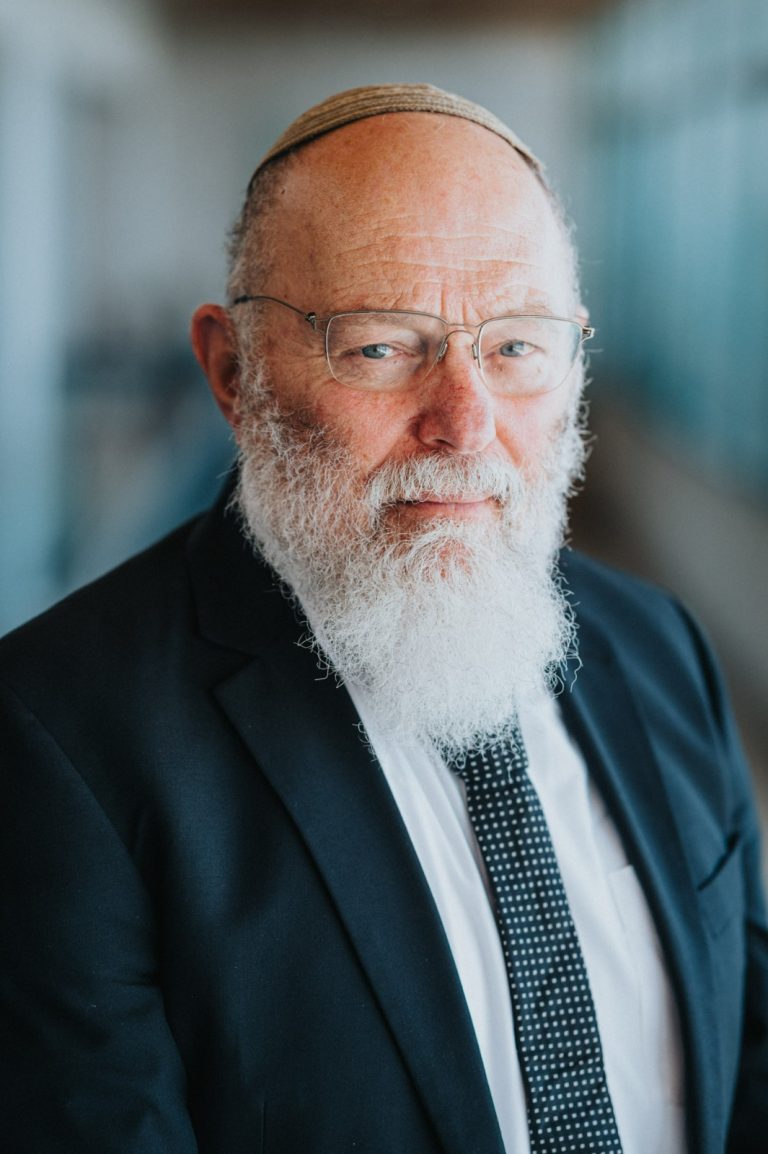


Ambassador Robert C. O’Brien joins the Misgav Institute’s International Advisory Council

Amb. O’Brien, co-founder and chairman of American Global Strategies LLC, served as the 27th US National Security Advisor (NSA) from 2019 – 2021, serving as the President’s principal advisor on all aspects of American foreign policy and national security affairs.

During O’Brien’s tenure, the United States orchestrated the historic Abraham Accords in the Middle East, brokered economic normalization between Serbia and Kosovo, achieved significant defense spending increases among NATO allies and increased cooperation with America’s allies across the Indo-Pacific.

Prior to serving as NSA, O’Brien was the Special Presidential Envoy for Hostage Affairs with the personal rank of Ambassador. He was directly involved in the return of over 25 detainees and hostages to the United States. O’Brien previously served as Co-Chairman of the U.S. Department of State Public-Private Partnership for Justice Reform in Afghanistan under both Secretaries of State Rice and Clinton.

Earlier in his career, O’Brien served as a Senior Legal Officer for the UN Security Council commission that decided claims against Iraq arising out of the first Gulf War. He was a Major in the Judge Advocate General’s Corps of the U.S. Army Reserve.

O’Brien is the recipient of the National Security Medal, the National Intelligence Distinguished Service Medal, the Department of Defense Medal for Distinguished Public Service, the National Defense Medal, the Legion d’honneur (chevalier), the Republic of China (Taiwan) Order of the Brilliant Star with Special Grand Cordon and the Kosovo Presidential Medal of Merits.  

In July 2022, O’Brien was elected as the Chairman of the Board of Directors of the Richard Nixon Foundation. O’Brien is a Distinguished Senior Fellow at the Pepperdine School of Public Policy and a Carnegie Distinguished Fellow at the Columbia University Institute of Global Politics. He serves as the Chairman of the Global Taiwan Institute (GTI) Task Force on US-Taiwan Relations. He is also a co-chair of the Center for Strategic and International Studies (CSIS) Commission on Hostage Taking and Wrongful Detention.

O’Brien holds a J.D. from the U.C. Berkeley School of Law. He received his B.A. degree in political science, cum laude, from UCLA.

Meir Ben Shabbat and Ambassador Robert C. O’Brien

Meir Ben Shabbat and Ambassador Robert C. O’Brien


Ten myths which need to be busted about Israel’s war

As Israel prepares for tough battles against Hamas in downtown Gaza, it has no less difficult wars to win on the diplomatic playing field. The bad policy thinking and faulty paradigms of the past still dominate in many capitals around the world, and too many people fall prey to the enemy’s propaganda. The battleground is global. Here are 10 myths that must be busted, 10 arguments that must be won.

1. Neutrality: Reticence to condemn Hamas amounts to collusion against Israel. Hesitancy to express explicit support for Israel at this time, which also will mean unequivocally backing Israel in the many months ahead of tough fighting to crush Hamas, is tantamount to siding with the enemy.

Neutral and anodyne sentiments about broken hearts, heartfelt feelings, sympathy for “all victims of conflict” and other such mushy musings – even as Israeli Jews were brutalized by heartless barbarians who next are coming for the West – is profound moral failure and a stab in Israel’s back.

Sympathy for the Palestinian People is understandable. To some extent, Palestinians are, after all, victims of their own horrible leadership. But this is the time for friends of Israel around the world to speak up loudly and unambiguously in support of Israel, not emote limp feelings of concern or equivocation.

2.  Ceasefire: The call heard around the world for a ceasefire is neither reasonable nor right. This call must be rejected. A ceasefire now would be a victory for the radical Islamist attackers and a defeat for Israel. The call for an immediate ceasefire is in fact meant to neutralize Israel, to leave it exposed and weakened against the next attacks sure to come from Hamas, Hezbollah, and other proxies of the Islamic Republic of Iran.

3. Negotiate: Believe it or not, the same Middle East “experts” who brought us the failed approach to handling Hamas, are once again advocating negotiations with Hamas because it supposedly is rational and can be bargained with to achieve stability.

Hamas has an interest in “economic peace,” they tell us; a desire to reach understandings on the release of all hostages; and to rehabilitate cizilian Gaza neighborhoods – if only Israel would play ball instead of bombing.The obtuseness and blindness of these experts is astounding and their shilling for Hamas must be repulsed. They blabber away as if the October 7 massacres never happened, as if Hamas’s true intentions have not been revealed. As if any compromise with Hamas is possible or advisable.

4. Distinction: “Hamas does not represent Palestinians in Gaza.” We have heard this contention from President Joe Biden himself and many other western leaders, even some Israeli leaders too. Except that broadly speaking, Hamas does faithfully reflect the desires and goals of most Palestinians in Gaza, otherwise they would not have been elected by the Palestinians of Gaza and been able to draft tens of thousands of jihadists into its military.

Gaza’s civilian population actively abetted Hamas in plotting against Israel, and thousands of ordinary Palestinians (not the “Nukhba” assault commandos) carried out the worst atrocities of the Simchat Torah (October 7) massacre. Tens of thousands have participated in riots on border fences going back years (which apparently served as cover for assault planning).

The “uninvolved” danced like dervishes around the trucks that hauled away the abducted men, women, and children of Kibbutz Be’eri, crying “death to the Jews” while helping Hamas hide them. “Uninvolved” mothers proclaim they are proud to send their children into battle to turn them into shahids (martyrs). And “uninvolved” teachers teach the children of Gaza that it’s a religious obligation and heroic task to kill Jews. The “uninvolved” have helped Hamas hide its rocket launchers and other weaponry too.

This does not mean that Israel can or should target every Palestinian household in Gaza. Not at all. But it does mean that the soft sentiments meant to prettify a lot of nasty Palestinians, to completely tie Israel’s hands behind its back in wartime, and to weaken Western resolve in backing Israel – are out of whack.

5. War crimes: It is Hamas that is guilty of war crimes, not Israel. In fact, Hamas must be held accountable for triple war crimes. Its barbaric attack on Israeli towns constitutes a war crime. Its use of civilians in Gaza as human shields (along with its expropriation of mosques, schools, and hospitals as bases of military action and weapons storage) is a second, compounded war crime. And its efforts to impede evacuation of the civilian population from the war zone (and in at least one instance, the bombing by Hamas of a civilian evacuation convoy that resulted in the deaths of over 80 individuals), represent a third layer of war crimes.

 Add to this several additional war-related offenses like inflating and manipulating casualty counts, stealing relief supplies meant for Palestinian civilians (see below), and more.

6. Palestinian Authority: The suggestion to bring the Palestinian Authority back as ruler of Gaza is both ridiculous and dangerous. No Palestinian group is weaker, more corrupt, and has less legitimacy among Palestinians than the PA. Abbas and his Fatah party never could or would block the rearmament and rebuilding of Hamas.

Moreover, Mahmoud Abbas and his coterie are also no less hostile to Israel than the Hamas gang, although they use less Islamic terminology. So, don’t delude yourself into thinking that the PA is the solution, or that a fully-fledged “two-state solution” is smart or feasible with Palestinian leaders of the near-term future.

7. Iran: Incredulously, Washington is reluctant to call out Iran for its leadership of the radical Islamic assault on Israel and its material support for Hamas, and there is a significant policy camp in Washington that still hopes for a deal with Iran after this war to “stabilize” the region.

President Obama’s predilection/delusion for strategic partnering with Iran runs deep into the Biden administration. Few in the administration yet understand the current opportunity (and the absolute need) to cut Iran’s regional heft down to size. This is a strategic and advocacy challenge for Israel.

 8. Qatar: This small, opulent emirate in the Gulf has a history of playing both sides in conflicts and getting away with it. It harbors Hamas leaders, funds Hamas, and operates the equally evil Al Jazeera television network which plays an outsized role in fanning radical Islamic and fiercely anti-Western flames across the region.

There should be an American ultimatum to Qatar in which they are given two hours warning to expel Hamas leadership, or else troops from the US airbase in Qatar will raid Ismail Haniyeh’s luxury compound in Doha and capture or kill him – just like it assaulted Osama Bin Laden’s headquarters in Pakistan.

Yes, I know that the Israeli national security adviser publicly thanked Qatar this week for its role in trying to get hostages released by Hamas. I think this is a mistake and plays into Qatar’s wicked double-dealing (and probably was said under extreme duress).

 9. Humanitarian refuge and relief: Relief for Gazan Palestinians should be the world’s problem, not Israel’s. Egypt, for example, outrageously has sealed its border with Gaza to hundreds of thousands of civilians seeking safety, because Egyptian President Abdel Fattah al-Sisi does not want “to hurt the cause of Palestinian statehood.”In other words, Sisi is denying Palestinian asylum seekers safety for geopolitical ends. This is a violation of international law and goes against the overwhelming practice of dozens of states in conflicts around the world over the past decade.

For its part, Israel cannot allow Hamas ongoing supplies of fuel and electricity during the war, therefore a blockade on Gaza is needed and justified. Limiting the flow of fuels and electricity into Gaza is meant to substantially impair the enemy’s military capabilities, and thus is legal warfare. This is not unlawful “collective punishment” of the civilian population.

Furthermore, to the extent that such tactical means are meant to pressure Hamas to release Israeli hostages, the non-supply of fuels and electricity to the enemy is ethical and further justified under international law.

Note: International law requires only that Israel facilitate the passage of food and medicine to civilians by third parties if – and only if – such goods can be reliably delivered without diversion to Hamas and without fear the goods will give Hamas an economic and military boost. Given Hamas’s 16-year exploitation of humanitarian aid and infiltration of human rights and international organizations in Gaza, diversion is not merely a possibility – it is a near certainty. And this has the potential of prolonging the conflict, resulting in greater loss of civilian life.

10. The Day After: Who will rule Gaza once Hamas is annihilated? What is the endgame? I don’t know. This is going to be a long war. Who knows how the war will develop and where it will lead? And as above, this matter is the world’s problem, not just Israel’s because resolution is tied to broader regional battles. So, Israel is exempt from answering this question – certainly now when it must focus laser-like only on outright military victory.

Israel is rightfully fixated on its entrance and victory strategy, not on exit strategies and Palestinian rehabilitation. In fact, the demand that Israel answer this question now is pointedly meant to prevent Israel from doing what needs to be done in Gaza, so it must be rebuffed.

Published in The Jerusalem Post, October 28, 2023.