
 Joseph Rozen



In September, Japanese Prime Minister Sanae Takaichi used her first address to the UN General Assembly to call the Council’s structure a relic of 1945. A majority of member states, she noted, back expanding both the permanent and non-permanent categories. She also demanded the prompt removal of the “enemy state” provisions in Articles 53, 77, and 107 of the Charter, wartime clauses that let the founding members take military action against Japan or Germany without Security Council authorisation.
This sounds so ridiculous that one can assume that it will never be put into force. Not if you ask China. After Takaichi hinted last November at Japanese intervention in a Taiwan contingency, China invoked the clause to legitimise potential countermeasures. In addition, Beijing’s Foreign Ministry rejected her call the day after her speech, defending the clause as a safeguard against “fascism and militarism”. Interesting choice of words coming from China.
The absurdity is even greater, as member states already agreed to delete the language in 2005 but never invoked. Why? Because amending the Charter requires ratification by all five permanent members, including China and Russia, the two with the most reason to keep a lever against Japan.
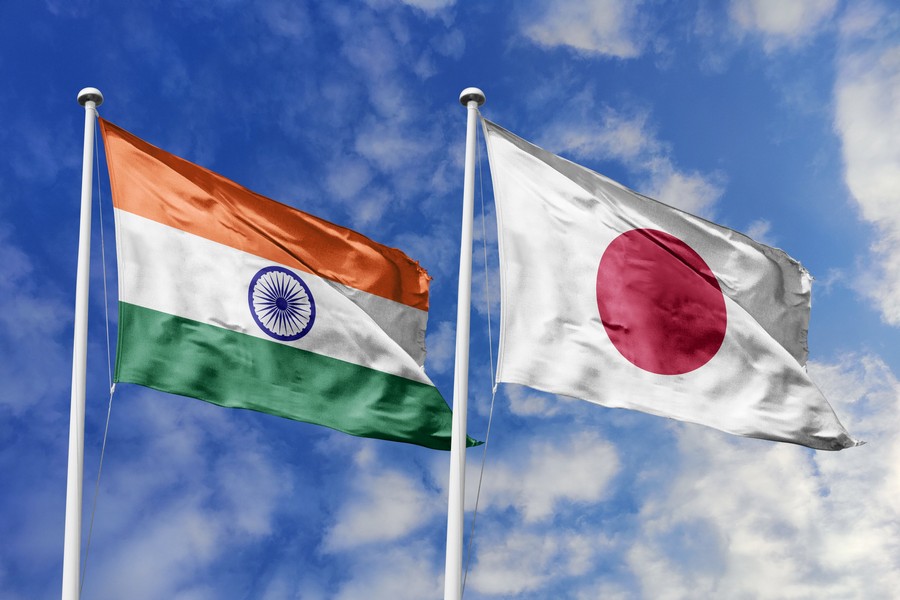
India makes the same case. At the Brics summit in New Delhi, Prime Minister Narendra Modi put it bluntly: “UNSC reforms can no longer wait”. He said the current order is a “pyramid of privilege” that must become a “platform of partnership”.
Changing the UN is now a foreign policy priority. India, Japan, Germany, and Brazil, the G4, have a standing proposal to expand the Council from 15 members to 25 or 26, with six new permanent seats and a concession that new permanent members would hold off on exercising veto power during a review period. It is the most realistic reform proposal on the table. The United States, Russia, France, and the UK have each publicly backed India’s bid.
The odds of reforming the Council are still very low. But India and Japan have the political weight and the support of the Global South to pressure China into accepting at least some amendments, and if China refuses, they can offer an alternative. Both start from the same premise: the UN is not fulfilling its mandate, as the war in Ukraine, the Iran war, and the threat to Taiwan have made clear, and in its current form it is irrelevant.
The obstacle is not merit, population, economic weight, or contribution. Japan is the world’s fourth-largest economy, and India is among the top six. Japan is the third-largest contributor to the UN’s regular budget, at nearly 7 per cent. The obstacle is a procedural order built in 1945 and exploited by blocs and vetoes. China pays 20 per cent of the UN’s regular budget, second only to the United States, and it is the most effective user of bloc politics in the system, shielding itself from the scrutiny others face.
Israel knows this machinery from the receiving end. The General Assembly delivers automatic majorities against it. The Human Rights Council has passed 116 resolutions against Israel since 2006, more than against Syria, Iran, Russia, and Venezuela combined, and Item 7 of its agenda is the only one dedicated to a single country.
For years, Israel was on the defensive, documenting bias and contesting resolutions. That work is necessary, but it leaves Israel a bystander to the one process that could change the UN’s architecture and not just litigate its outputs.
India and Japan are two of Israel’s most important Indo-Pacific partners. Backing India and Japan does not cost Israel a thing. In return, Israel gets a seat in the coalition actually trying to rewrite the rules, next to two democracies with the weight to make that fight credible.
Published in Firstpost, October 30, 2026.
*The opinions expressed in Misgav publications are the authors’ alone.