
 Meir Ben Shabbat
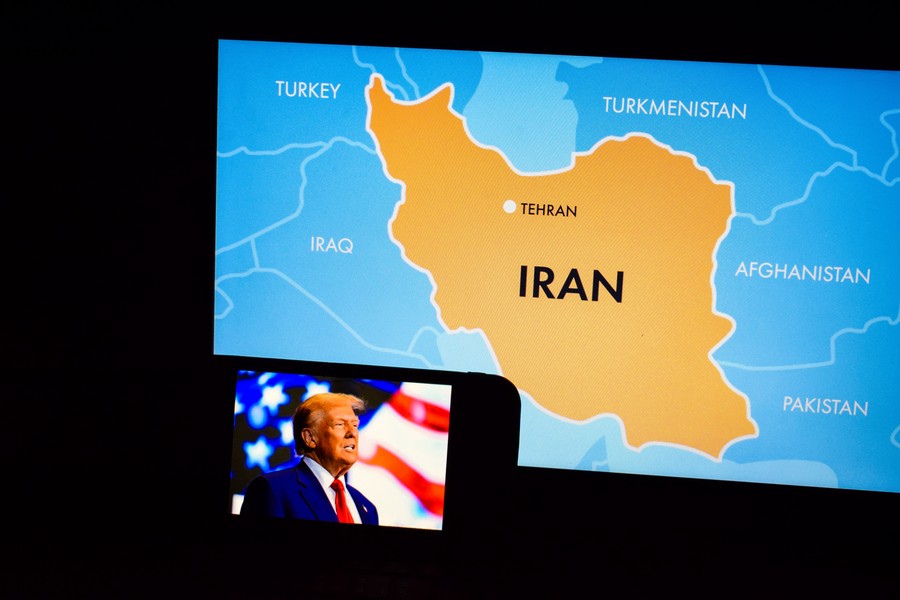


“Iran never won a war, but never lost a negotiation,” US President Donald Trump tweeted in January 2020, after the elimination of Qassem Soleimani. It was not the first time he had used that wording to urge Iran to prefer the negotiating track. The memorandum of understanding with it will likely serve as convincing proof of that.
The full details of the understandings reached by the sides have yet to become clear, but what has already been published is enough to substantiate the concerns in Jerusalem.
A preliminary hint of what lies ahead was provided last week by US Vice President JD Vance, who made clear that “the interests of the US in an agreement with Iran may be different from those of Israel.” He added, “Israel will like it or not like it, but this is the interest of the US.”
Survival, hope and rebuilding
It should be said at once: Any deal with Iran is worse than the alternatives, because it establishes the legitimacy of the extremist regime and gives it the most important thing it needs: survival, hope and resources for rehabilitation.
According to reports, the memorandum of understanding offers the Iranians far more than that. It heralds the beginning of the end of the severe economic distress that sent masses of citizens into the streets in protest and fueled the internal threat to the regime’s survival. Opening the Strait of Hormuz to Iranian oil exports will allow Tehran to earn millions of dollars every day. Added to that are the billions expected to flow to Iran once the memorandum of understanding enters into force and during its implementation.
Including the Lebanese front in the framework of the deal is a gift to Iran. Not only will it ensure a space of immunity for Hezbollah, the most important proxy organization from Iran’s perspective, but it will also gain recognition of its status as a player in the Lebanese front. If the expectation was to dismantle Iran’s hold over the proxy organizations, this agreement actually tightens it. This is happening as the administration of Gen. Joseph Aoun is singing a different tune and desperately needs to remove the suffocating patronage of the ayatollahs’ regime.
And not only that. As far as is known, the deal makes no reference to the issue of ballistic missiles. Iran’s progress in this field created a strategic threat not only to its neighbors and the countries of the Middle East, but also to Europe.
The sequence set out in the memorandum of understanding means the US is paying Iran in cash and receiving in return a postdated check whose details are unclear and whose coverage is doubtful. According to the reports, the nuclear issues will be discussed only at a later stage, when the regime in Tehran is no longer in its current distress and when the effectiveness of the US levers of pressure, military and economic, will be lower, if they exist at all.
If today, four months before the midterm elections, Trump is avoiding a resumption of the fighting, it can be assumed that after 60 days, when the elections are even closer, he will hesitate sevenfold. They know this in Tehran as well, and therefore they will not rush to reach understandings on the nuclear issues, which are complicated in any case.
Trump entered the memorandum of understanding while being seen by the entire world as someone eager to reach an agreement, at almost any price. This is being seen both by America’s adversaries and by the leaders of the countries in the Middle East. Reports of certain countries in the region moving closer to Iran are evidence that their leaders understand that the US does not intend to finish the job, and that it is worth preparing with an alternative safety net.
There is no doubt that Washington’s conduct surrounding the agreement will project weakness and affect the US’ standing in the Middle East, and not only there.
To all this must be added the sense of betrayal among the regime’s opponents in Iran, who risked their lives, paid heavy prices and are still waiting for the same “green light” that they say was promised to them as part of the efforts to topple the regime. One can only imagine what this does to the Trump administration’s credibility.
The achievements of the current war against Iran should not be dismissed in any way. They are many and significant. It is precisely against this background that the frustration grows, because of the assumption that these achievements make it possible to achieve better results against Tehran.
As for Israel, the world and the countries of the region received a demonstration not only of its capabilities, but also of its daring, determination and unified mobilization in the sustained effort to remove an existential threat.
Israel does not need to issue declarations. Its enemies know very well that these characteristics will continue to exist even in a reality of an arrangement.
Israel is not a party to the deal. It must adhere to its traditional position, according to which it will do what is necessary to defend its security. This applies to all fronts, and certainly to the Lebanese one. It does not need to poke Trump in the eye, argue with him or defy him.
As Chief of Staff Lt. Gen. Eyal Zamir put it, our actions will speak.
Published in Israel Hayom, June 15, 2026.
*The opinions expressed in Misgav publications are the authors’ alone.