
 Noa Lazimi
  Noa Lazimi
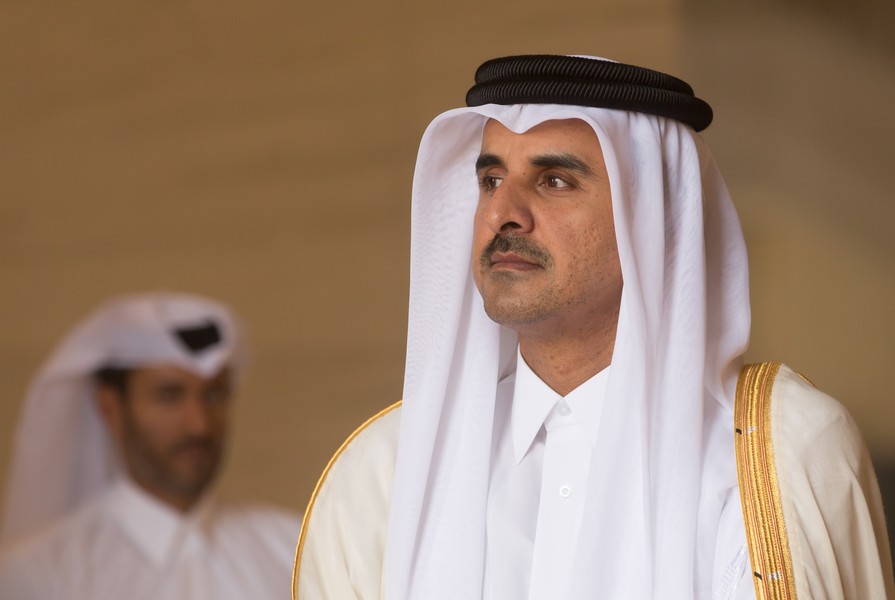


A trilateral meeting of the United States, Israel, and Qatar was held Sunday as part of an American initiative to jumpstart a process aimed at easing tensions between Doha and Jerusalem, against the backdrop of efforts to advance Phase B of President Donald Trump’s plan for Gaza. The meeting was attended by US Middle East envoy Steve Witkoff, Mossad director David Barnea, and a senior Qatari official.
Following Prime Minister Benjamin Netanyahu’s apology in September, Qatar is seeking to solidify its image as a constructive mediator and launder its reputation despite its ongoing support for terrorism. This comes amid statements from Doha declaring that “Qatar will not take part in funding the reconstruction of the Gaza Strip,” arguing that “we will not sign the checks that rebuild what someone else destroyed.”
Beyond strengthening their already elevated international standing – bolstered significantly by their central role in Trump’s “points plan” – the Qataris are keen to further tighten their ties with Washington, which grants them extensive security benefits, including a defense agreement anchored in a presidential order.
Improving relations with Qatar
If the process of rapprochement progresses and such meetings continue, Israel must make it clear that any advancement depends on concrete steps from Doha. Every move toward improved relations with Qatar must be conditioned on the cessation of all support for Hamas – direct or indirect – and on a complete halt to any promotion of interests aligned with the organization’s goals. Only under these terms can Israel ensure that any emerging diplomatic dynamic serves its strategic interests rather than granting further legitimacy to actions that endanger it and destabilize the region.It is important to recognize that behind the scenes, Qatar – together with Turkey – continues to shape developments in the Gaza arena. The close ties maintained by Doha and Ankara with Hamas serve their own strategic interests, granting them channels of influence and leverage.
Israel should be concerned by attempts from both countries to engineer mechanisms that would hollow out the very idea of disarming Hamas, as reflected in several recently published initiatives, including proposals to store the organization’s weapons rather than dismantle them.
Taking action against terrorism
Under current conditions, Israel should seize the momentum created by ongoing legal efforts in the US to outlaw the Muslim Brotherhood – currently limited to Lebanon, Jordan, and Egypt – and work with Washington to extend such designations to the organization’s branches in Qatar and Turkey.In addition, the United States could require the Qatari government to take legal action against entities operating on its soil that are involved in funding organizations already designated by the US as terrorist groups. Qatar must also commit to ending anti-Israel propaganda on its Al Jazeera media network and cease providing a safe haven to senior Hamas operatives who continue to reside there.
Regarding Gaza, Israel should work to curb Qatar’s attempts to expand its footprint in the Gaza Strip under the guise of humanitarian projects, which risk functioning as a civilian façade for Hamas’s governing mechanisms. Furthermore, Jerusalem should firmly oppose any “soft” model – promoted by Doha and Ankara – of disabling or placing out of use (decommissioning) Hamas weaponry, such as transferring arms to the Palestinian Authority or storing them under supervision.
Instead, Israel must insist on the complete and total dismantling of Hamas’s military capabilities (disarmament). In close coordination with the United States, Israel must make clear to Qatar and Turkey that it will not permit any arrangement – direct or indirect – that enables Hamas to remain standing.
Published in The Jerusalem Post, December 10, 2025.