
 Prof. Zaki Shalom



Israel’s history has witnessed two episodes of secret diplomatic and security cooperation that have been characterized as “collusions.”
The first involved secret talks between Israel and Jordan’s Hashemite Kingdom, led by King Abdullah, in 1947–1948. Israeli representatives sought to establish a shared understanding aimed at preventing the creation of an independent Palestinian state. The emerging arrangement envisioned only two states between the Jordan River and the Mediterranean Sea: Israel and Jordan.
The second episode unfolded in 1956, when Israel, Britain, and France reached a secret understanding ahead of the Suez Crisis. Their objectives included undermining Egyptian President Gamal Abdel Nasser and restoring British-French control over the Suez Canal. The agreement was concealed from the British Parliament and kept secret for political and diplomatic reasons.
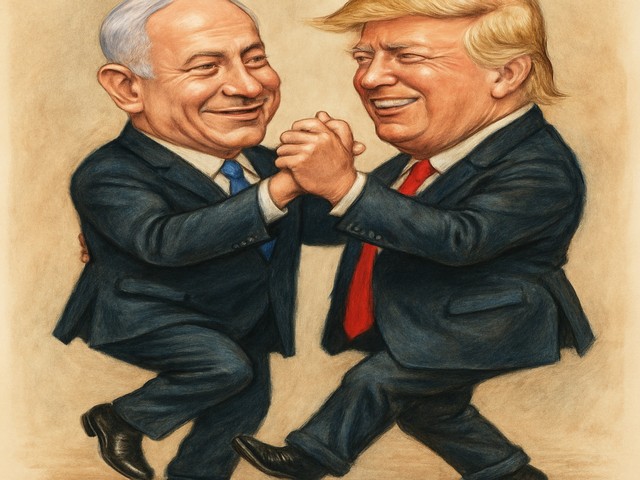
President Donald Trump’s recent letter concerning Israel’s upcoming elections raises a provocative question: Has a third secret understanding emerged, this time between Trump and Prime Minister Benjamin Netanyahu, particularly regarding Iran?
Trump’s intervention is extraordinary. His letter goes beyond conventional expressions of support for an ally and intrudes into the heart of Israel’s domestic political process. Never before, it would appear, has a US president intervened so directly and publicly in an Israeli election.
The letter expresses considerable appreciation for Israel’s resilience and the courage displayed by its people during the recent war. Trump also portrays Israel as a vibrant democracy whose leaders are chosen through free elections. These remarks reinforce Israel’s democratic credentials and carry significance in the American political arena.
Yet the letter also contains a deeply troubling message. Trump warns Israeli voters against choosing the “wrong leader” and suggests that, should Netanyahu fail to remain prime minister, the United States might have to confront Iran alone, an undertaking Trump indicates he would prefer to avoid.
The implication is unmistakable: Israeli voters are being warned that rejecting Netanyahu could leave their country facing the Iranian threat without the American support it needs. Whatever Trump’s intentions, such language places extraordinary pressure on the Israeli electorate and raises serious questions about the limits of an ally’s legitimate involvement in another democracy’s political affairs.
American involvement in Israeli politics is not new. Successive administrations have sought to influence Israel’s leadership and strategic direction. Trump’s intervention, however, appears to go further by combining an explicit endorsement of a particular leader with a warning about the potential security consequences of voting against him.
Eight meetings between Trump and Netanyahu, some reportedly held in private with no other participants present, have provided opportunities to discuss strategic understandings whose full contents remain unknown to the public. It is conceivable that the two leaders believe certain arrangements concerning Iran and regional security can be achieved only through their personal relationship.
This possibility gives Trump’s letter a significance extending beyond electoral politics. It may reflect a broader strategic understanding between the two leaders, whose terms and implications have yet to be disclosed.
In the coming weeks and months, more may emerge about the nature of their discussions. Until then, it would be premature to conclude that a secret agreement exists. Nevertheless, the combination of Trump’s extraordinary intervention, his explicit warning to Israeli voters, and the strategic relationship between the two leaders raises a question that Israel’s history makes difficult to ignore:
Will this episode eventually be remembered as the third collusion in the history of the State of Israel?
Published in Israel Hayom, on October 20, 2026.
*The opinions expressed in Misgav publications are the authors’ alone.