

To break the cycle of enemy surprises, Israel must understand the ideology behind terrorism and combat the incitement that prepares the next generation.
Prof. Zaki Shalom
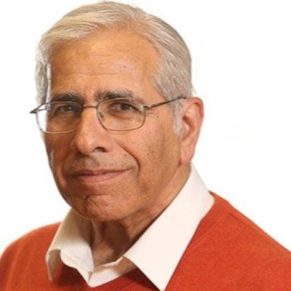
Prof. Zaki Shalom
A member of the research staff at the Institute for National Security Studies and a Prof. Emeritus at Ben Gurion University. He has published extensively on various facets of Israel's defense policy, the Arab-Israeli conflict, and the role of the superpowers in the Middle East, and Israel's struggle against Islamic terror. His work has also focused on the study of Israel's nuclear option, both in historical and contemporary perspectives. He is the author of numerous articles and several books, including Israel's Nuclear Option: behind the Scenes Diplomacy between Dimona and Washington (Sussex Academic Press and Jaffee Center for Strategic Studies, 2005), and Ben-Gurion's Political Struggles, 1963-1967: A Lion in Winter (Routledge, Taylor & Francis Group, 2006). In 2007 he was awarded the prime minister's prestigious David Ben-Gurion memorial prize for his book Fire in His Bones, which deals with Ben-Gurion's activities following his resignation as prime minister and until his death.
Israel-US Relations, Security Policy from a Historical Perspective, Israeli Leadership in Times of Crisis

A member of the research staff at the Institute for National Security Studies and a Prof. Emeritus at Ben Gurion University. He has published extensively on various facets of Israel's defense policy, the Arab-Israeli conflict, and the role of the superpowers in the Middle East, and Israel's struggle against Islamic terror. His work has also focused on the study of Israel's nuclear option, both in historical and contemporary perspectives.
He is the author of numerous articles and several books, including Israel's Nuclear Option: behind the Scenes Diplomacy between Dimona and Washington (Sussex Academic Press and Jaffee Center for Strategic Studies, 2005), and Ben-Gurion's Political Struggles, 1963-1967: A Lion in Winter (Routledge, Taylor & Francis Group, 2006). In 2007 he was awarded the prime minister's prestigious David Ben-Gurion memorial prize for his book Fire in His Bones, which deals with Ben-Gurion's activities following his resignation as prime minister and until his death.
-
-
As Tokyo grows more assertive over islands seized by Moscow after World War II, Israel faces a difficult choice: Support a key US ally or risk undermining arguments central to its own territorial and security claims.
-
No security system can prevent every act of terrorism, but security depends on asking what we have failed to imagine. The objective of the IDF should be the removal of the threat, rather than merely reducing, managing, or containing it, while the state addresses the ideological conditions that allow threats to regenerate.
-
The current crisis between Israel and Britain may deserve to be regarded as a watershed event in the history of Israeli diplomacy. Israel’s response reflects a striking departure from its …
-
The point is not that the Arab world is uniting against Iran or Turkey. Major Gulf states continue to seek dialogue with Tehran, and many Arab governments have practical reasons to preserve working relations with both powers. The important development may instead be a growing belief that Arabs themselves should be the central actors in organizing the Arab political and security arena.
-
For Washington, there is genuine risk. Iran’s leadership may conclude that it can no longer tolerate a humiliation and launch a direct attack on Israel. That would give Israel grounds for a broad counterattack and could draw the United States into precisely the escalation Trump has sought to avoid. Tehran could also claim that Israel deliberately tried to provoke an Iranian response in order to force Washington into an all-out war.