Yossi Amrosi: What we will likely see is lengthy legal procedures and appeals which will make the terrorists into heroes. This could lead to copycats and more terrorist attacks. Terrorists sentenced to death will become famous, and this is extremely dangerous.
Only a few hundred of them have been convicted of murder, and only they would be eligible for parole. So there will always be motivation to kidnap Israelis, and the death penalty won’t prevent that.
Terrorists have this internal willingness and preparedness to die. From decades of talking to terrorists, their motivation always comes back to their faith and religion.
Dr. Yossi Mansharof: Senior officer Amar, who leads Corps 11000 in Iran’s Quds Force, heads a mechanism targeting Jewish sites, not just Israeli ones. This activity is driven by an anti-Semitic motive, which is a core element of the Iranian regime’s goal to destroy Israel. Despite Israel’s successes in thwarting many plots, Iran’s determination and the intense activity of its intelligence and espionage networks leave no room for complacency.
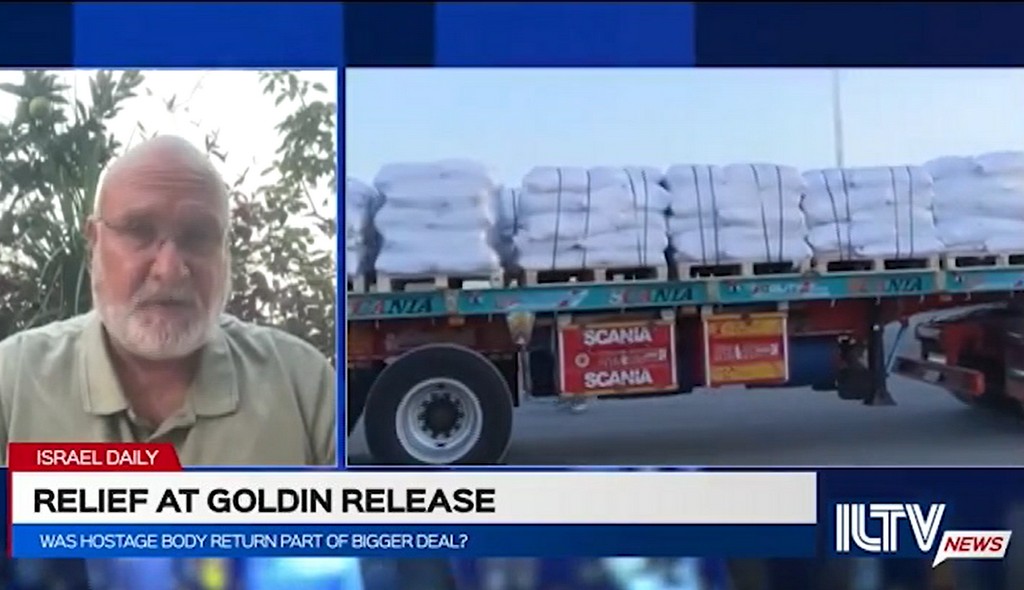
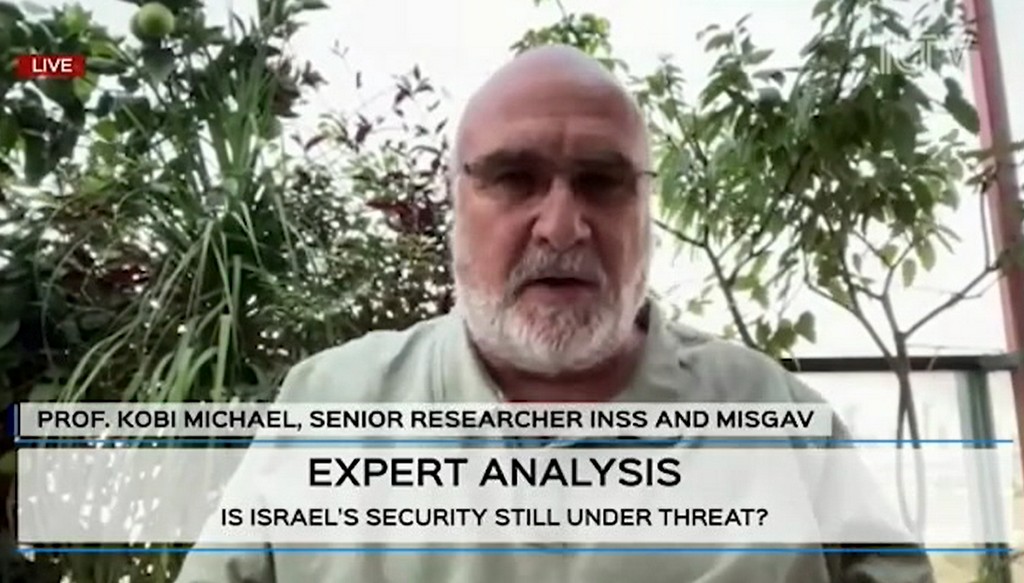
Prof. Kobi Michael discuss the crucial hope that Hadar Golden’s return results from Hamas committing to President Trump’s “20 articles plan,” thereby avoiding the release of militants. He stressed that Israel must encourage the US leading aid distribution in Gaza, as the successful realization of this plan fulfills all of Israel’s declared war objectives. Finally, he offered the perspective that the US administration views Syrian President Alshara as a future American asset against Hezbollah and Iran, potentially facilitating Syria’s entry into the Abraham Accords.
The full interview took place on ILTV on November 9, 2025.
Prof. Kobi Michael: Israel’s idea is to use Morag as a screening zone for Palestinians being moved south, to prevent Hamas from infiltrating the area. That would allow Israeli troops to operate further north without Palestinian civilians getting caught in the crossfire.
The move might allow Israel to ramp up the pressure on — and possibly defeat — Hamas in northern Gaza, where guerilla-style fighting continues to dog Israeli troops. And that, he added, could lay the groundwork for an end to the war, which Israel has vowed to continue until Hamas is destroyed.
Prof. Kobi Michael discusses foiled terror plots, identified as a trial by Hamas heavily backed by Iran, aimed at opening new global fronts to harm Jews and Israelis outside of Israel. He argues that this growing violent extremism, seen in Europe and beyond, necessitates that European governments seek crucial assistance and intelligence from Israel given their lack of experience in dealing with this strategic threat.
The full interview took place on Channel I24, on November 6, 2025.
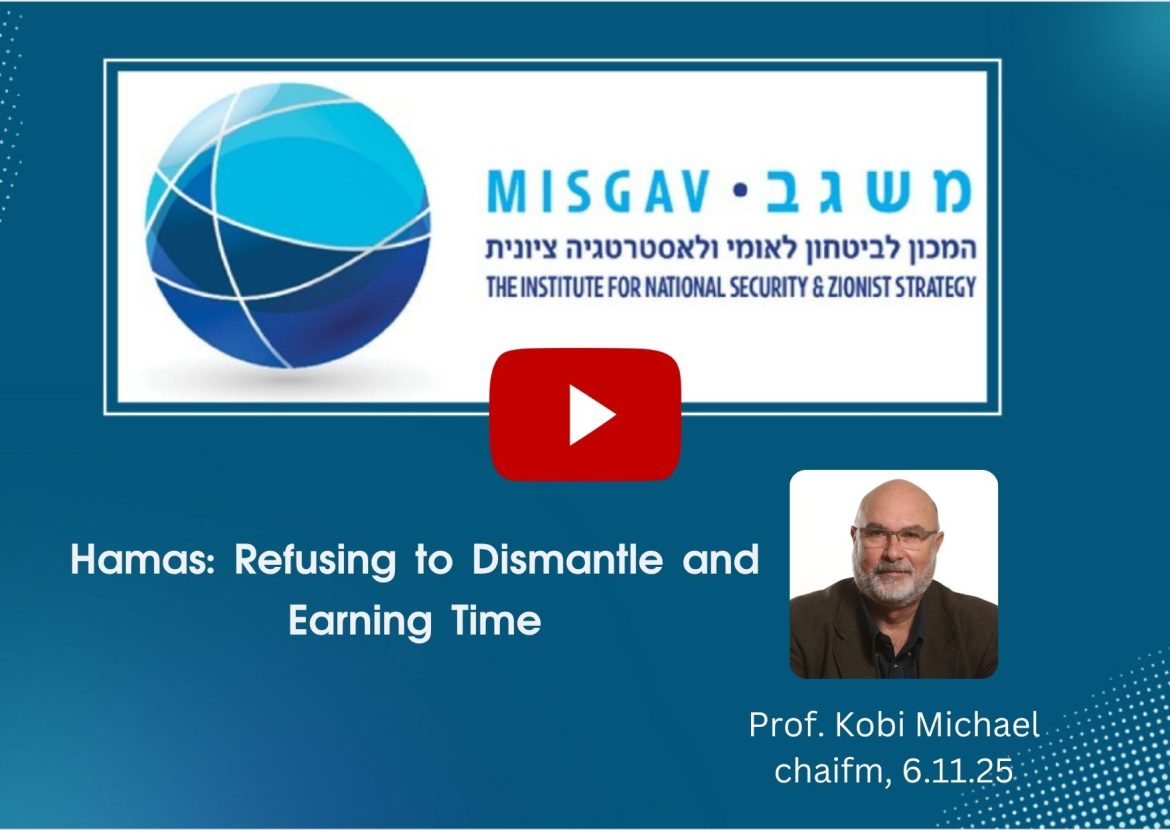
Prof. Kobi Michael discusses the manipulative tactics of Hamas regarding the return of deceased hostages, asserting that the group is intentionally wasting and earning time to reconstitute its military and governmental strength because it believes it holds the upper hand. He critically examines the inherent problems of the proposed plan, arguing that Hamas does not intend to dismantle itself and noting the adversarial role of mediators like Turkey and Qatar, who cooperate with Hamas and whose involvement complicates the stabilization and demilitarization efforts.
The full interview took place on CHAI Fm on November 6, 2025.
Asher Fredman discussed the challenge of disarming Hamas, stating that the proposed International Stabilization Force and Palestinian police are highly unlikely to succeed in disarming Hamas, requiring Israel to set a firm deadline (one to three months) for progress before taking unilateral action. Additionally, he asserted that Turkey’s current leadership opposes Hamas׳ disarmament and will likely support the group under the guise of reconstruction.
He also praised Israel’s move to redefine weapons smuggling via drones across the Egyptian border as a national security and terrorist threat.
The full interview took place on Channel I24, on November 6, 2025.
Prof. Kobi Michael: The parallels with Lebanon continue: the proposed U.S.-backed International Stabilization Force (ISF) in Gaza would mirror the “mechanism” that monitors the ceasefire in Lebanon. In the ideal U.S. scenario. Hamas would be dismantled and disarmed, a technocratic government formed, and an international stabilization force and “peace council” established. This would require full Israeli withdrawal from Gaza and coordination with that force to prevent Hamas from rearming. If the force fails – as in Lebanon – the Israeli army would re-enter and strike Hamas, something we’ve become accustomed to doing in Lebanon.
For Israel the preferred outcome is a two-zone Gaza, separated by the yellow line: “Since Hamas is unlikely to disarm – just like Hezbollah – Israel should proceed gradually and in parallel: begin implementing the plan in the east, while continuing to fight in the west until Hamas is dismantled.
Prof. Kobi Michael arguing three main points in his interview. First, he asserts that Hamas is intentionally playing games and manipulating the process concerning the bodies of the dead hostages to waste time, allowing them to reconstitute themselves militarily and politically since they do not intend to leave the Gaza Strip. Second, he insists that the idea of exchanging 200 militants for the body of Adar Goldin is a “red line” that Israel must not tolerate, as it would violate existing agreements and set a dangerous precedent; he stressed that terrorists must only be given the option to surrender or be killed. Finally, he suggests that the IDF must resume military fighting in western Gaza until full demilitarization is achieved, as Hamas will not dismantle itself voluntarily, while a gradual governance mechanism begins operating in the eastern part.
The full interview took place on ILTV on November 5, 2025.
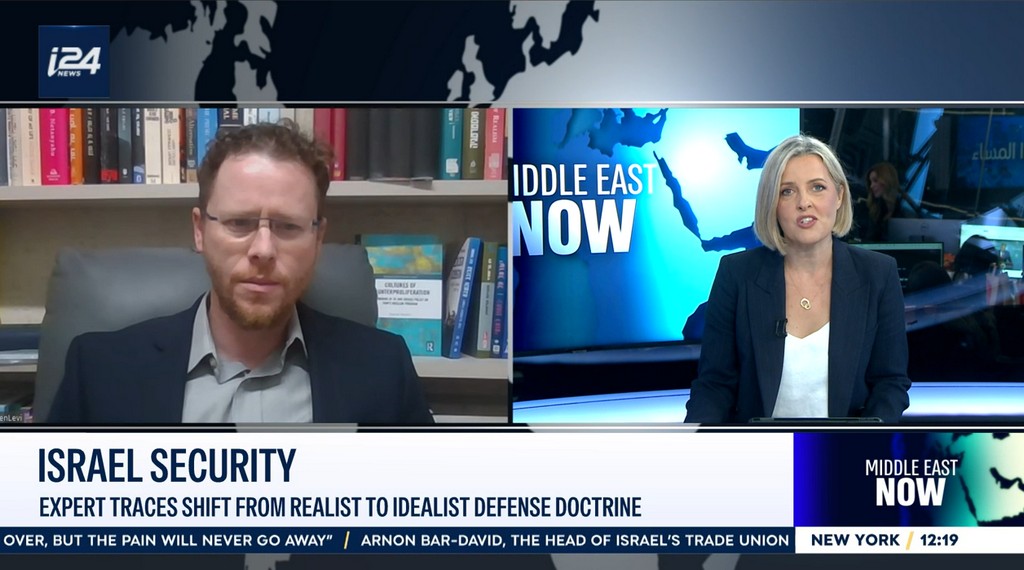
Dr. Raphael Ben-Levy argues that Israel is making a fatal mistake in calling for peace with undefeated enemies and must return to its earlier, successful realist security doctrine, which was largely abandoned starting in the late 1980s. This doctrine, which led to great successes for the first four decades of the state, rests on three core pillars: achieving decisive victory in every round of war fighting as a prerequisite for peace, adopting a tactically offensive approach (including preemption and taking territory), and maintaining complete self-reliance rather than depending on foreign forces like UNIFIL. While Israel appears to have returned to this offensive approach in the northern sector by maintaining buffer zones and acting preemptively, Ben Levy warns that a decisive victory has not yet been achieved against Hamas in Gaza, and Israel should be skeptical of relying on any international force to disarm the organization.
The full interview took place on Channel I24, on November 3, 2025.