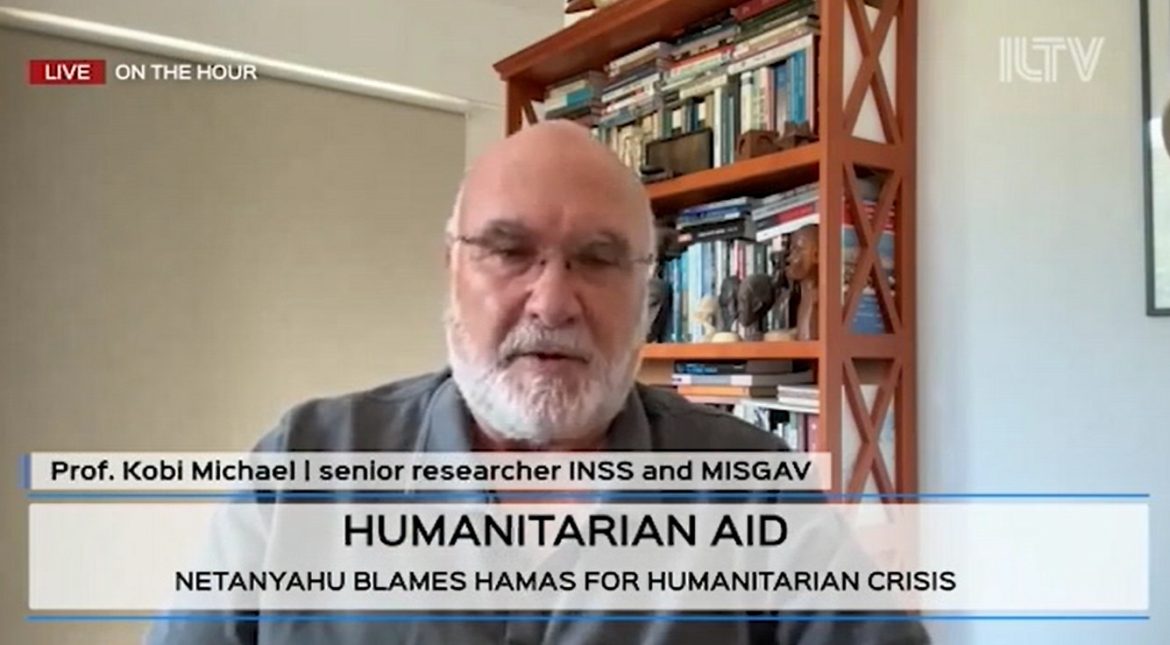
Prof. Kobi Michael: It looks like the government has already decided. They are going for full occupation of the Gaza Strip. The only real alternative was to go for an agreement on Hamas’s terms, which means to surrender.
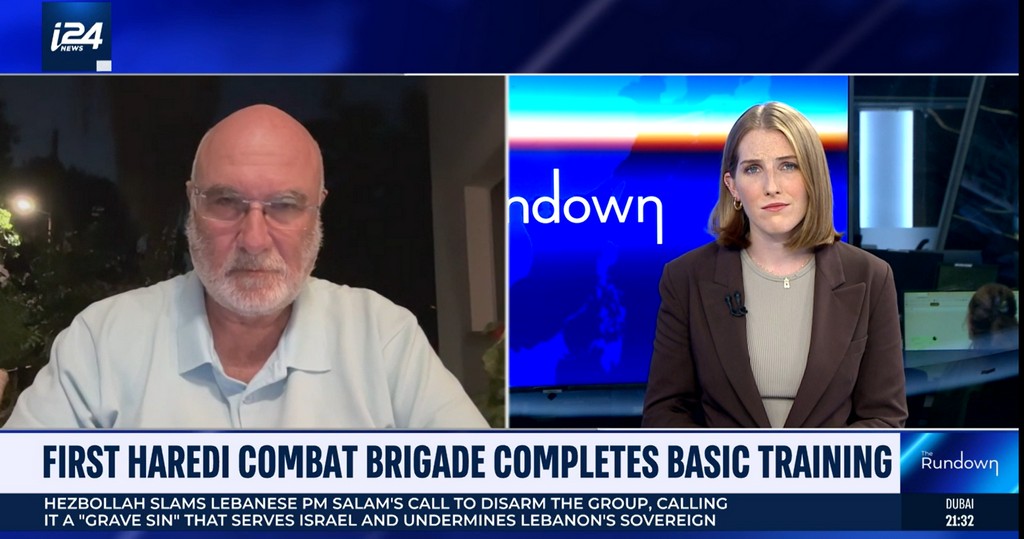
Prof. Kobi Michael: It might be considered a success but a very partial one, and certainly not a success without risks for the IDF. We must remember that, while service and equal service is an important value that should be shared by all sectors of Israeli society, including the ultra-Orthodox, we are talking here about a very isolated and unique unit, where there is more than one source of authority.
In every other IDF unit, there is a single, ultimate source of authority: the IDF and its commanding officers. Here, in addition to that, there is also a rabbinical source of authority. I think this creates a potential for future conflict.
Secondly, the unique characteristics of this brigade ultimately excluded women. That exclusion stands in contrast to another core value — the value of gender equality — which is not only central to the IDF, but to Israeli society as a whole.
At the end of the day, I am not sure this brigade will truly create a breakthrough in increasing the number of ultra-Orthodox recruits joining the military.
The full interview took place on Channel I24, on August 6, 2025.
Prof. Kobi Michael: Not only did human rights organizations and many media outlets base their faulty reports on information published by Gaza’s Ministry of Health, which is run by Hamas, they also did not take the nature of Hamas seriously.
Hamas is not the most reliable source in the world. The international media and other sources do not consider the interests of Hamas, or its strategy, and they do not seem to acknowledge that Hamas wants a chaotic situation in the Gaza Strip. Hamas wants there to be many casualties among Palestinian civilians, because it serves their interests.
Just to listen to what Hamas leaders have been saying since October 7. They have promised to repeat October 7 again and again, they have called on the Arab world to join the armed resistance against Israel and on the Arab public to pressure their regimes.
They have also said publicly, and loudly, that they have no problem sacrificing another 100,000 Palestinian civilians for the sake of the victory.
Prof. Kobi Michael: Hamas is not the most reliable source in the world. The international media and other sources do not consider the interests of Hamas, or its strategy, and they do not seem to acknowledge that Hamas wants a chaotic situation in the Gaza Strip. Hamas wants there to be many casualties among Palestinian civilians, because it serves their interests.
Just to listen to what Hamas leaders have been saying since October 7 – They have promised to repeat October 7 again and again, they have called on the Arab world to join the armed resistance against Israel and on the Arab public to pressure their regimes. They have also said publicly, and loudly, that they have no problem sacrificing another 100,000 Palestinian civilians for the sake of the victory.
Meir Ben Shabbat: Unfortunately, some countries fall prey to Hamas’ manipulation. The world finds it easier to identify with the suffering of the weaker side. Israel gains sympathy only when its mutilated citizens’ bodies dominate news broadcasts, and even then, it is short-lived. The horrors of October 7 were quickly forgotten. Leaders criticizing Israel must understand that their conduct encourages terror elements to exploit civilian suffering. Accepting demands to halt the war because of civilian casualties—caused by terror groups—only strengthens that method, which will not be limited to Gaza.
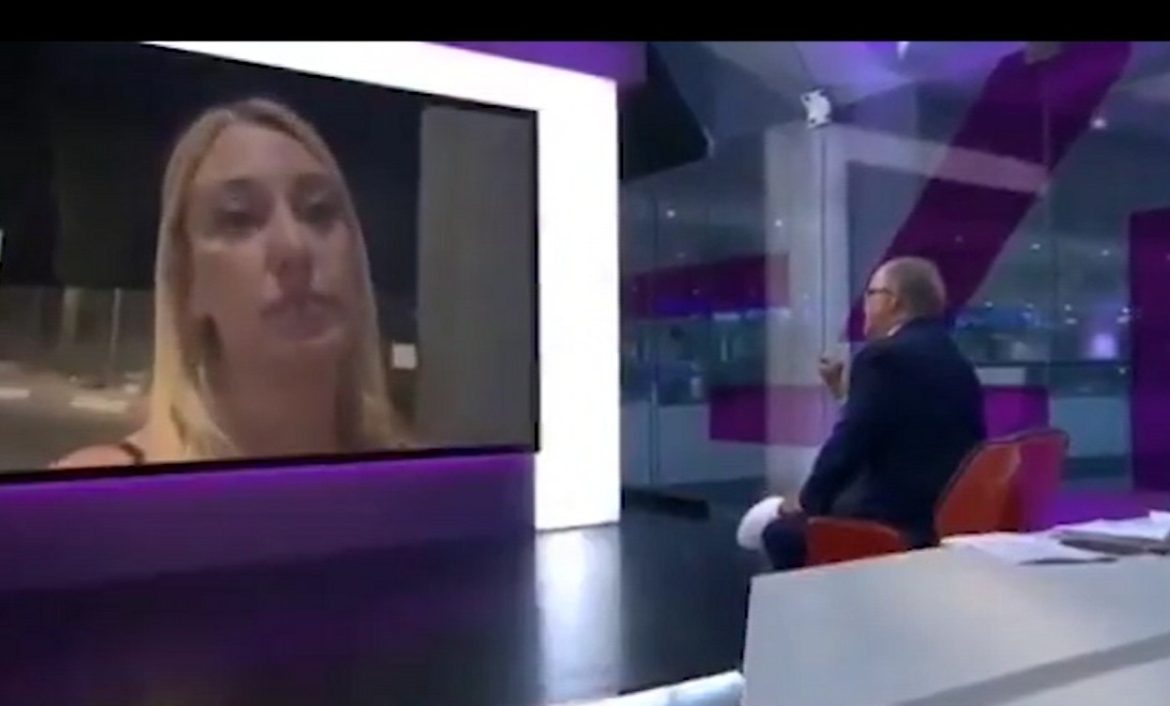
Ruth Wasserman Lande: If you are willing to have your daughters 30 metres away from terrorists who have said again and again, very, very unashamedly, that they will carnage, massacre, rape and burn them because they are British or Christian or whatever it is that you belong to. And you feel that your government should not do anything at all. Plus, your government would be giving food to those specific people, who wish and claim and claim again that they will ravage, massacre, burn and rape your daughters. And you feel that this is a normal situation and you feel it is correct to give them a state which they had since 2005. They had independence. And what did they do with that independence? They carnage their own territory.
The interview took place on Channel 7 on July 31, 2025.
Meir Ben-Shabbat: There is a difference between difficult conditions that emerge from a lengthy war and intentional starving on Israel’s part. If Hamas will release the hostages and disarm, the war will end.
Instead of defending itself, apologizing and explaining, Israel should promote the plan for voluntary immigration from Gaza … while putting Hamas under pressure.
Israel needs to continue its war until it reaches all of its goals. This is an existential war for Israel.
Lahav Harkov: Israel needs a formal, professional, civilian body responsible for public diplomacy, with a budget and full-time paid personnel enabling it to operate more fully at all times, not only in wartime. Having consistent names and faces that journalists and the public know will allow for more effective communication when a crisis breaks out.
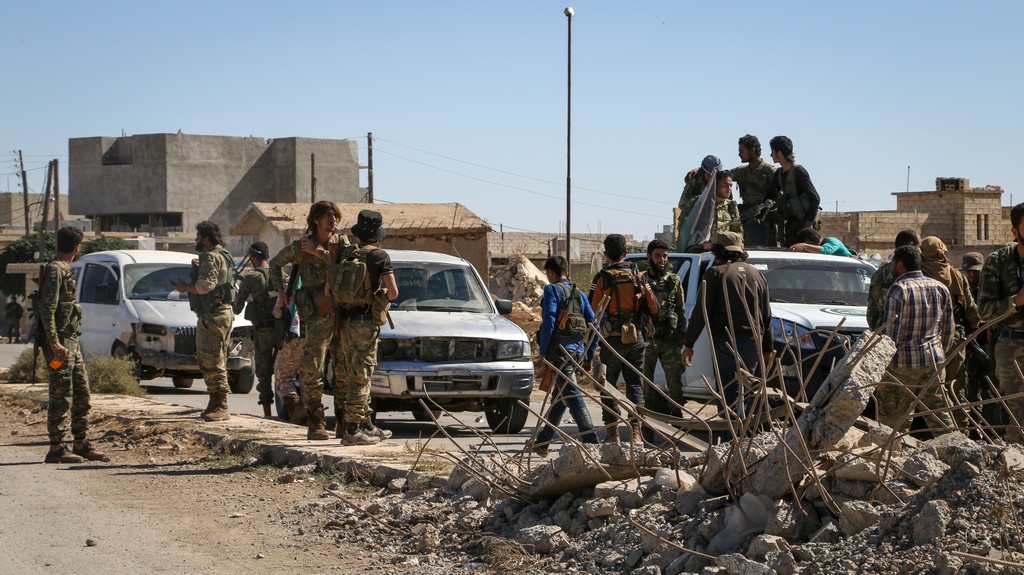
Prof. Kobi Michael:The reopening of the IDF’s field hospital in southern Syria serves as a clear signal that Israel is not abandoning its allies.
Israel needs to maneuver between the need to protect its vital security interests, the ethical-historical commitment to the Druze citizens of Israel and the Druze minority near its borders, and the need to establish coordination and cooperation mechanisms with a stable and non-hostile Syrian regime as a basis or infrastructure for further cooperation and for Syria’s inclusion in the new regional architecture in the spirit of U.S. President Trump’s vision.
Prof. Kobi Michael: Unfortunately, we didn’t do that. We didn’t choose any strategic path or stick to it. We’ve been dancing something like a Yemenite dance—two steps forward, one step backward—and eventually we found ourselves in this mess.
Now we are reaching this option while being in the worst position with regard to the international community, and after paying very heavy prices in every aspect one can think of.
The interview took place on ILTV on July 28, 2025.