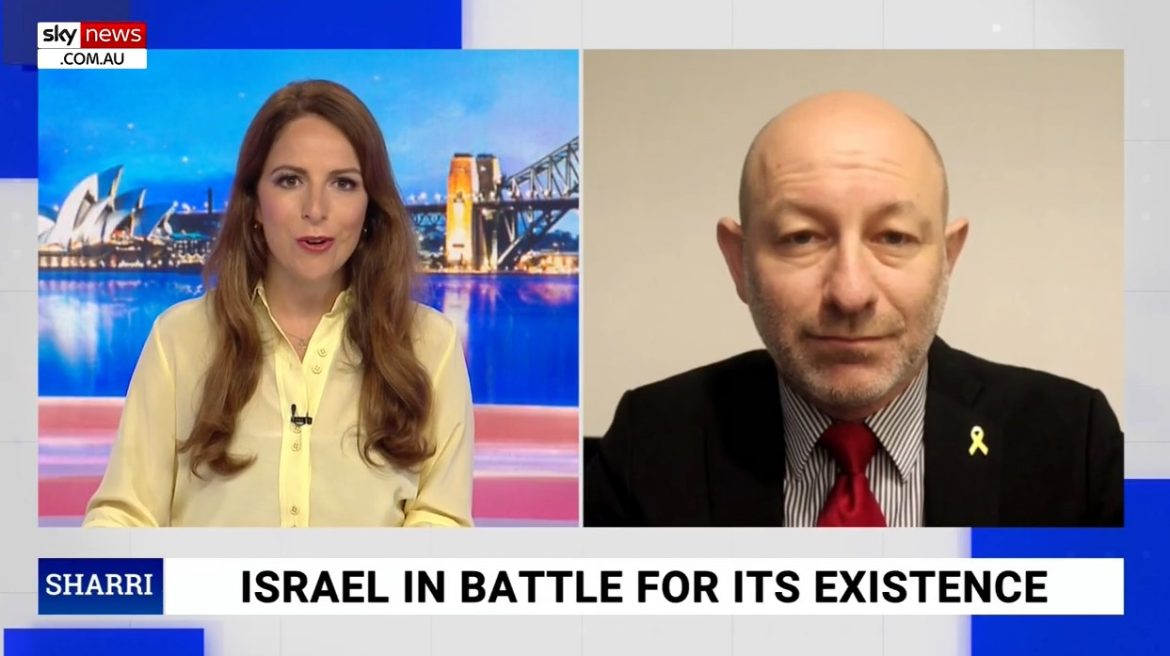
Arsen Ostrovsky: Hezbollah is not the Salvation Army. They are a genocidal terror group, sworn to Israel’s destruction and acting at the behest of the Iran regime. And that they are doing all this right under the noses of UNIFIL.
The interview took place on Sky News (Australia), October 14, 2024.
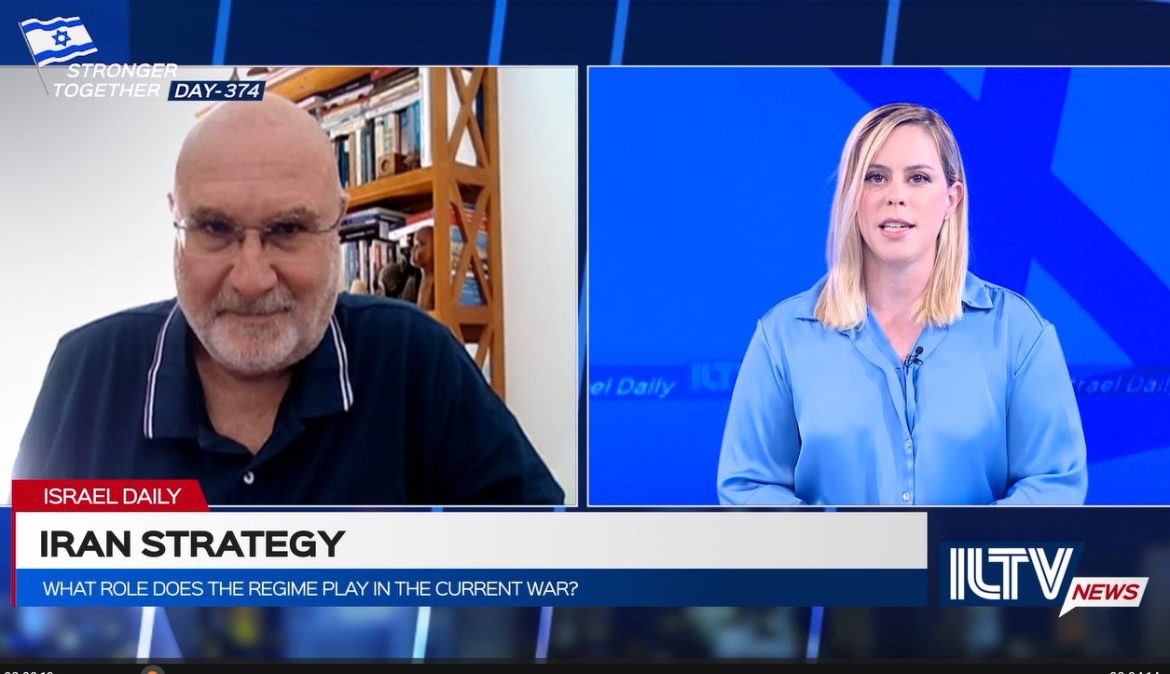
Prof. Kobi Michael: Israel’s actions against Iran and the targets it chooses will depend on the level of cooperation between Israel and the United States. If Israel is able to reach an understanding with the U.S. regarding the destruction of Iran’s nuclear infrastructure—whether not in the initial phase of operations, but perhaps after Iran’s response—I assume that Israel will target military assets, and possibly symbolic targets as well, during the next stage of operations. However, if Israel is unable to reach an understanding with the U.S. by November 5th, the day of the U.S. presidential election, I assume Israel will proceed independently, targeting a broader range of sites, including Iran’s nuclear infrastructure.
The interview took place on the ILTV channel on october 13, 2024.
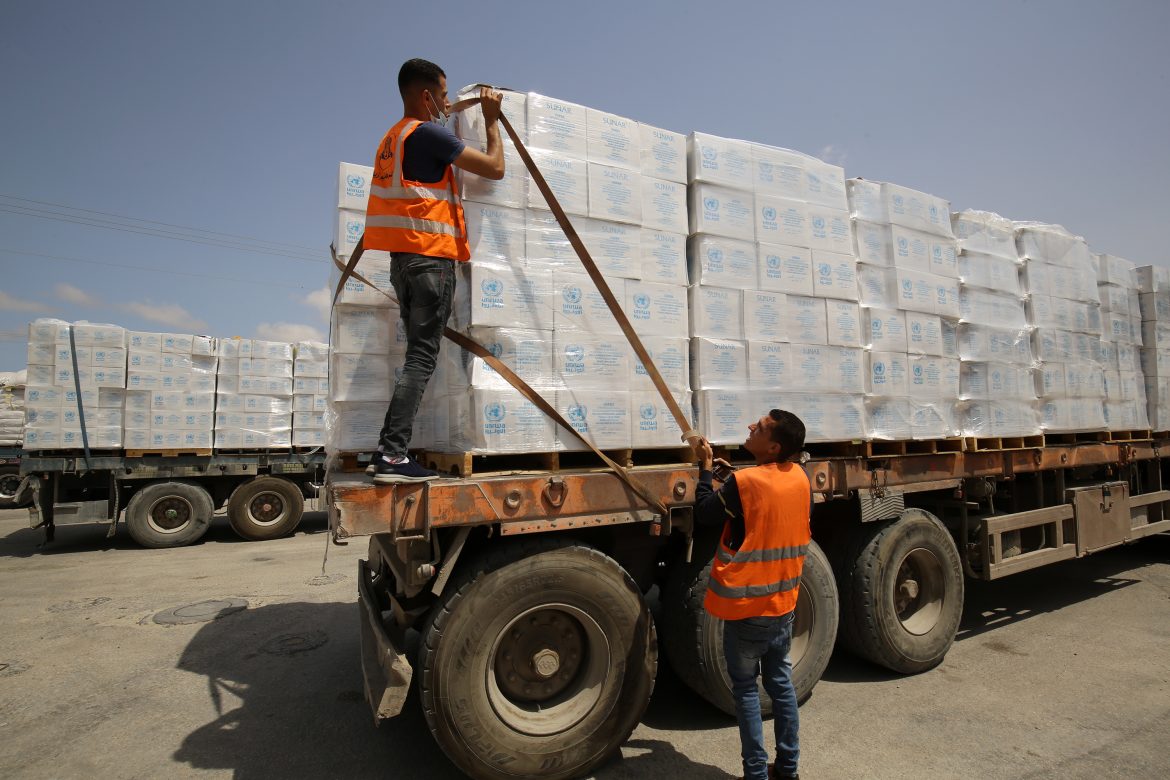
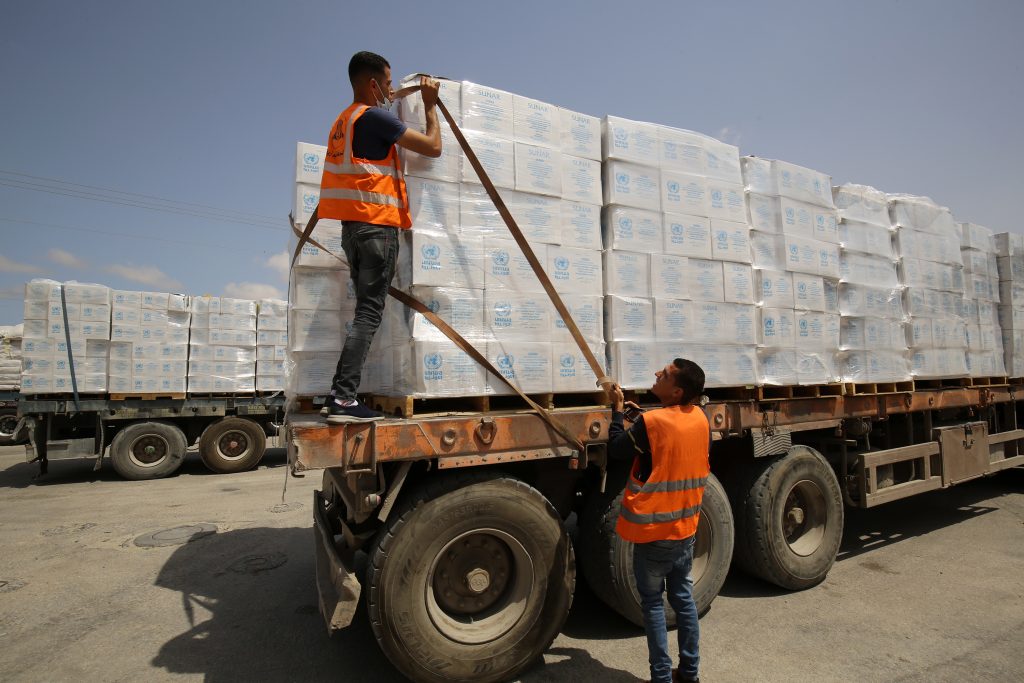
Prof. Kobi Michael: There were reports about a month ago that Hamas has earned as much as $500,000 by selling the humanitarian aid it looted from the international organizations. With this money, it pays salaries to its remaining members and manages to mobilize new ones.
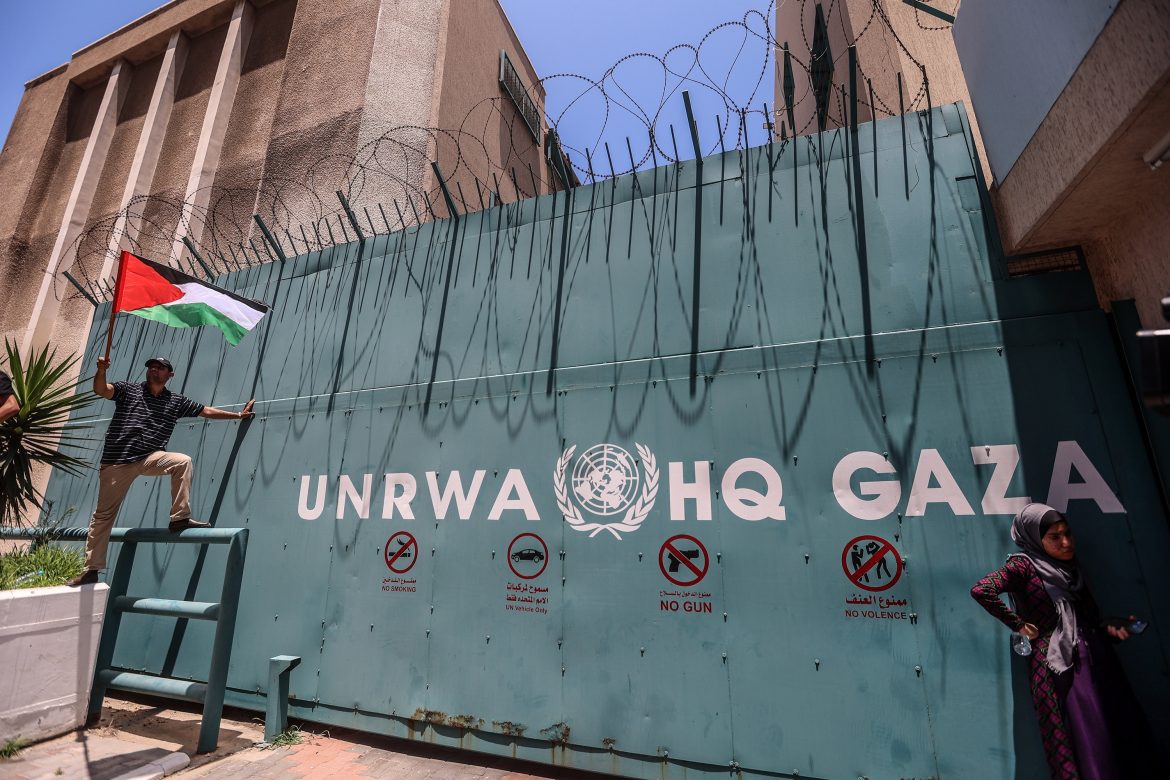
Hamas continues to take control of at least 50 percent of all the humanitarian aid that enters Gaza. The trucks with humanitarian aid are inspected by Israel before they enter the Gaza Strip. Once they are on the other side of the fence, they are supposed to be taken over by international organizations that distribute the aid. But these organizations are not able to manage the enormous amount of aid that is being sent to Gaza.
Col. (res.) Prof. Gabi Siboni: It’s a strategic failure of the IDF that it refused to take control over the aid distribution, and the strategic failure of the international community which insists on delivering humanitarian aid to zones of the Strip where the IDF had ordered the civilians to evacuate.
Humanitarian aid should not at all be heading towards the north of the Strip, where the IDF ordered the civilians to evacuate to the south.
Joseph Rozen: I agree with the general view that China is always trying to find the opportunity to work with different parties, but it doesn’t mean there was a more dramatic shift in its position vis-a-vis Israel.
China seeks to be “a global player that can talk with everyone, but its main interest is to compete with the U.S. Therefore, I try not to describe its position as anti-Israel, but more anti-American. They’re using the situation in the Middle East” to create problems for Washington.
Prof. Kobi Michael: The entire Israeli strategy is totally different from what we knew before. It’s not a question of being aggressive. It’s a question of being much more determined and understanding that enough is enough and we don’t have to tolerate this situation. If before Oct. 7, the Israeli strategy was to create change of a first order—which means to accept the existing system and try to make changes to the existing system—now the strategy is to create change of a second order, which means to change the entire system, to change the rules of the game, to change the existing balance of power.
In this regard there is also an opportunity to change the situation of the Palestinian refugees on the ground.
Hezbollah and Iran have been surprised by Israel’s ability to fight a long, multi-front war with growing success, former Israeli national security adviser Meir Ben Shabbat tells JNS.
Hezbollah hints at ceasefire after firing 13,000 rockets, missiles & drones at Israel’s people – for a whole year. In this Daily Briefing, Citizen Spokeswoman Ruth Wasserman Lande explains what Hezbollah means and what will happen next.
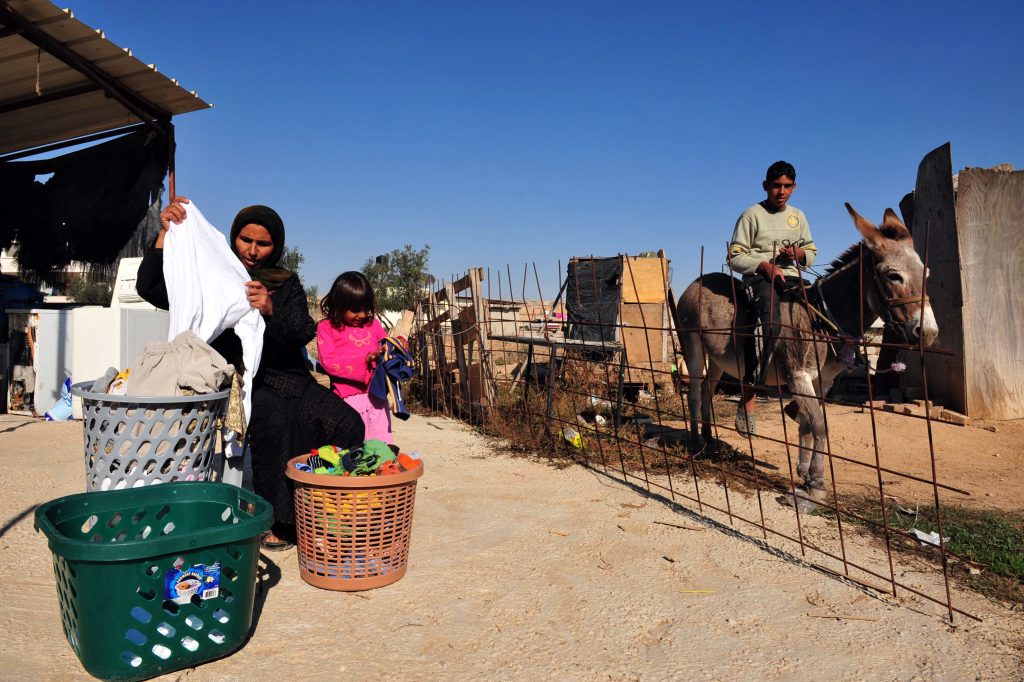
Prof. Kobi Michael in JNS: The Bedouin society in the Negev is a ticking time bomb due to problematic elements growing within it. They [the problematic elements] are definitely not the majority of the Bedouin society, but they are very dangerous.
These elements of Bedouin society are the products of religious radicalization processes led by Hamas and the Northern Islamic Movement, combined with Palestinian nationalism, influenced by the family ties of these elements to the Gaza Strip and Hebron—both Hamas and Palestinian nationalist strongholds—due to the phenomenon of polygamy and the acquisition of Palestinian women who receive Israeli citizenship by virtue of their marriages.
Ruth Wasserman Lande: As a mother of four children who were in a shelter just a few days ago, waiting for hours as the threat of Iranian ballistic missiles became an all-too-real experience, the fear of future conflict is undeniable. The hope for peace with the Palestinians may seem like a distant dream. However, I believe, as do many others, that if Israel maintains a strong security position, we cannot afford to turn a blind eye in today’s world. We must remain vigilant and ensure the safety of our civilians.”
If Israel maintains a strong security advantage—because, in my humble opinion, and I believe many others share this view—we cannot afford to turn a blind eye in the current global situation. We must maintain vigilant security measures, especially with the buffer zones that allow civilians to live peacefully. With this foundation, a comprehensive agreement can be reached with the international community, but it will require cooperation from the UN and Saudi Arabia.
The interview took place on I24 English channel on 7 October, 2024.
Ruth Wasserman Lande: The Republic of Iran has created a “wall of fire” surrounding Israel by funding, training, and inciting proxies instead of engaging in direct warfare.
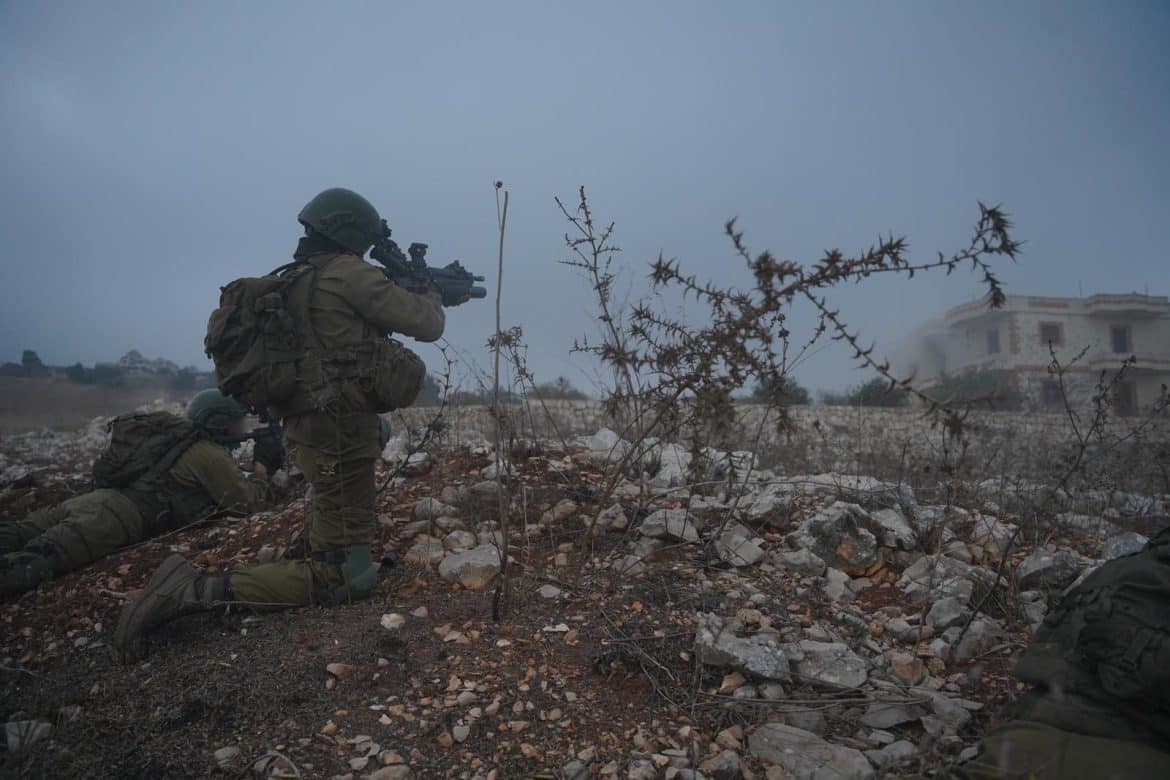
We are at war only with those who commit atrocities such as rape, murder, and burning our people—like Hamas did from Gaza, entering our territory unprovoked and committing mass murder. Hezbollah, too, has been planning to carry out similar attacks. They have specific plans to do exactly the same, which is the sole reason why our soldiers have entered Lebanon: to dismantle their tunnels.
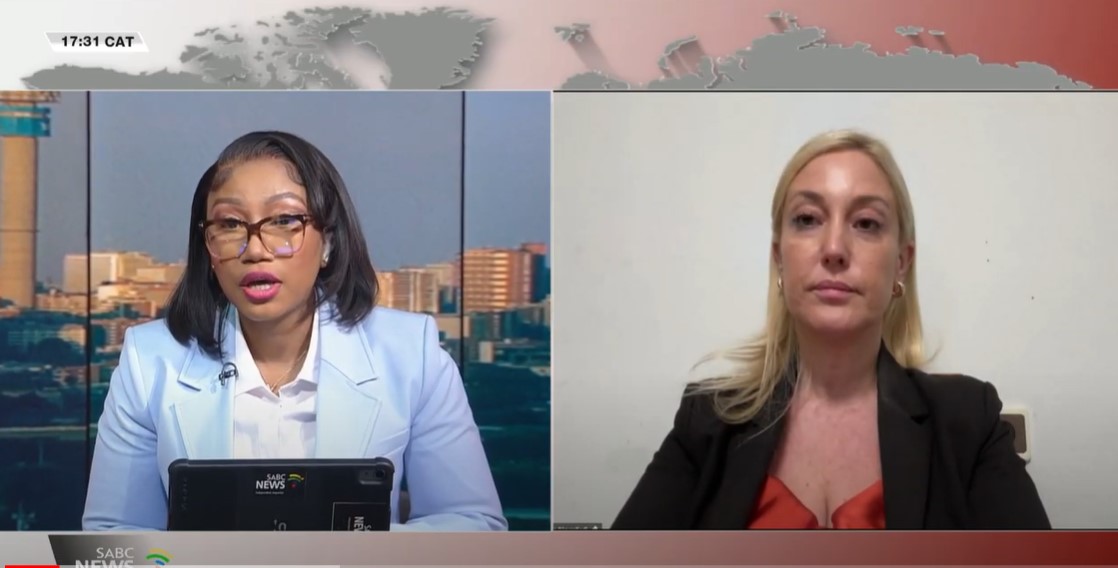
The interview took place on SABC NEWS on October 4, 2024.