
 Asher Fredman
  Dr. Adi Schwartz

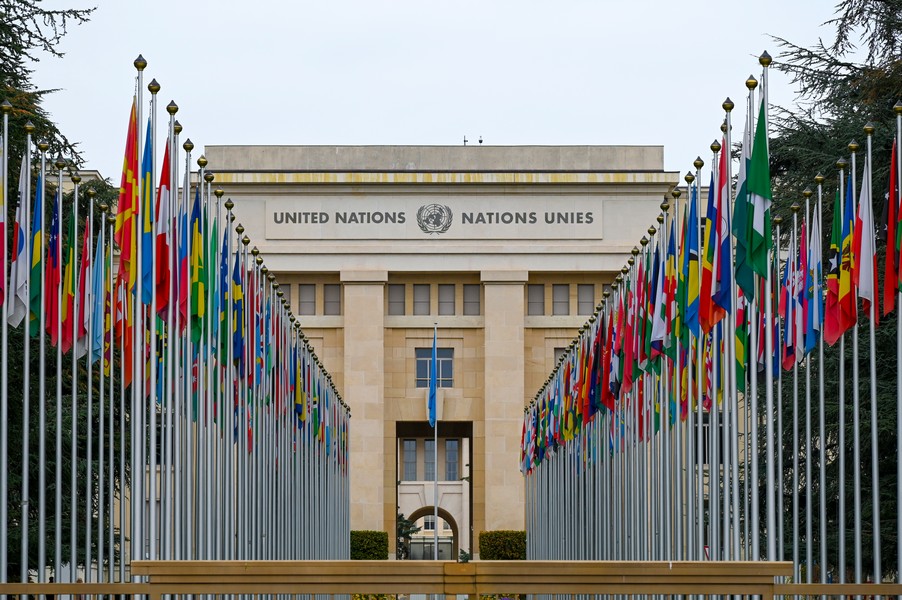


The UN Human Rights Council will soon adopt another set of resolutions targeting Israel and accusing the Jewish State of some of the most severe crimes known to the international community, and will join the nearly 75 resolutions and condemnations already adopted by UN bodies against Israel since Hamas began the October 7 massacre.
It may be tempting to dismiss these votes as mere rhetoric. In fact, however, such resolutions and the reports and investigations that undergird them do not remain confined to the halls of the UN.
They are increasingly used to fuel the use of legal systems against Israel and the IDF, promote corporate blacklists and arms embargoes, and advance efforts to convince future policymakers that Israel is uniquely evil.
The UN has become perhaps the central engine of the global campaign to delegitimize and demonize Israel. A recent Misgav Institute for National Security report that we co-authored mapped more than 30 UN bodies, entities, commissions, and mechanisms that contribute to this campaign.
Some of these UN bodies and mechanisms were created explicitly to advance the Palestinian narrative. Others operate under broad mandates involving women’s rights, children, housing, or climate, yet repeatedly use their platforms and resources to condemn Israel and portray it as antithetical to universal values.
This is not a collection of disconnected bureaucratic failures. It is an integrated machine. One UN body converts a baseless allegation into a purported finding.
A second cites that finding in a resolution. A third uses it to justify a blacklist, boycott campaign, or legal measure. A fourth disseminates the accusation, now carrying the imprimatur of the United Nations, to governments, media outlets, and universities around the world.
That is how libels become policy.
It is important to note that the UN does not merely target Israel. It also undermines the vital interests of the United States and the entire free world.
Under the UN’s one-country, one-vote system, democratic states are routinely outnumbered by blocs that include authoritarian governments, radical regimes, and countries dependent on Chinese economic and political support. For example, the “G77 and China” bloc includes 134 countries, which constitute nearly 70% of UN member states.
This gives Beijing enormous influence over numerous UN forums and votes that determine budgets, appointments, resolutions, investigative mechanisms, and institutional priorities.
China uses that influence to shield itself from scrutiny, promote its strategic interests, and undermine US positions on issues such as sanctions, migration, nuclear deterrence, and Taiwan.
Trump provides a unique oppertunity for Israel
The Trump administration has begun to depart from the traditional American approach, which viewed US participation in the UN as vital to American global leadership. It increasingly recognizes that the United States should participate in and fund international organizations only when doing so serves American interests.
Israel should seize this opportunity to work with the United States, other partners, and like-minded states to dismantle and defund the UN infrastructure that enables these anti-Israel and anti-Western campaigns. In parallel, it should encourage the creation of better alternatives for international coordination and cooperation.
Israel should urge the United States to lead a policy of maximum disengagement from UN bodies that undermine American and allied interests, and to end funding for institutions that advance anti-American agendas, promote economic and legal warfare against Israel, or provide platforms to regimes that violate human rights on a massive scale.
Countries unwilling to go so far as to support full defunding of the UN should at least make their funding conditional on deep reforms, including the cancellation of mandates and mechanisms that blatantly discriminate against Israel, whitewash terror, or undermine the interests of democracies and moderate states.
Countries opposed to the UN’s vast institutionalized machinery of anti-Israel demonization can also reduce their funding in a manner proportional to the percentage of UN budgets dedicated to the delegitimization of the Jewish State.
Israel should also do all it can to bring about the rapid closure of UN bodies that support or enable terror. The UN Relief and Works Agency (UNRWA), by providing salaries and material support to Hamas members and promoting the myth that Palestinians will “return” en masse to Israel, plays a central role in perpetuating the conflict. A key condition for creating a better future for Gaza must be the complete and total dismantlement of UNRWA.
Similarly, Israel should insist that, following the end of the UN Interim Force in Lebanon’s (UNIFIL) mandate, no similar body be established in its place.
UNIFIL received billions of dollars while Hezbollah built one of the world’s largest terrorist armies under its nose. Indeed, the recent US-facilitated Israel-Lebanon framework agreement, like the Abraham Accords before it, shows that American-led diplomatic initiatives can often produce far better outcomes than UN processes and paradigms.
The UN may have been created with worthy aspirations 80 years ago. But it has failed in its primary goal of preserving peace and security, has become a tool through which China and other American adversaries undermine Western interests, and has established itself as a principal legitimizer of the global campaign against Israel.
This is not merely a public-relations problem. It is a national security threat.
Israel, the United States, and other democratic allies should confront it accordingly: weaken the institutions that fuel delegitimization, deny them the resources to continue, and build more effective alternatives in their place.
Published in The Jerusalem Post, June 29, 2026.
*The opinions expressed in Misgav publications are the authors’ alone.