

 Dr. Yossi Mansharof
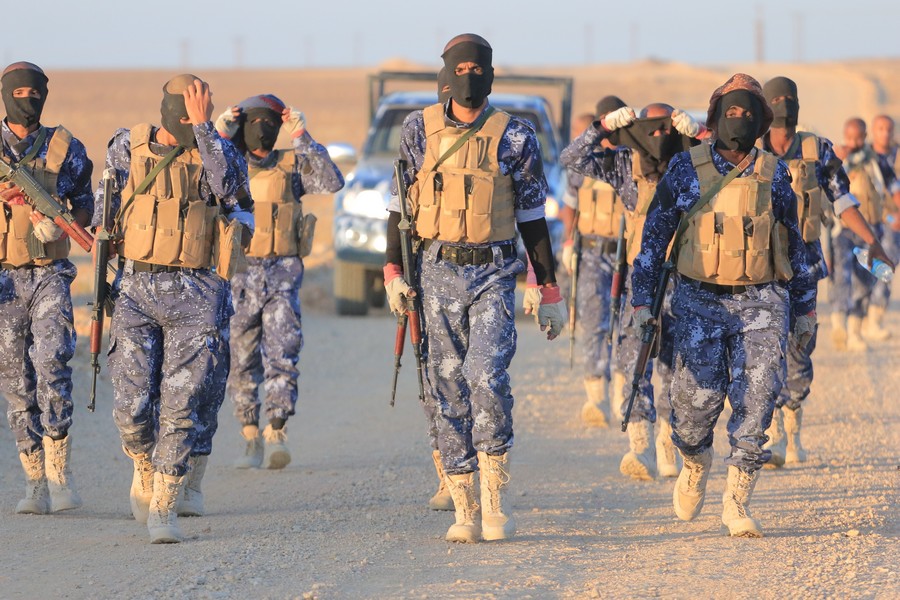


Defense Minister Israel Katz’s recent disclosure in a Knesset Foreign Affairs and Defense Committee hearing on the Syrian-Israeli border, revealing that Israel is preparing for a scenario in which Houthi forces attempt to enter the Golan from Syria, marks an important milestone in the ongoing confrontation between Israel and the Houthis.
This development, together with recent reports of Hamas and Islamic Jihad entrenching themselves in Syria, underscores the strategic necessity of Israel maintaining control over Mount Hermon and the other Syrian territories held by the IDF since the collapse of the Assad regime in December 2024. These areas serve as a critical buffer between terrorist organizations and the communities of the Golan.
The Syrian arena is not unfamiliar to the Houthis. During the Syrian Civil War (2011-2018), Houthi operatives were deployed by the Islamic Revolutionary Guard Corps’ Quds Force to fight Assad’s opponents as part of their combat training, and reports from that period confirmed Houthi casualties in Syria.
In September 2024, Yemeni and Syrian opposition outlets also reported that dozens of Houthi operatives specializing in missile launches had arrived in southern Syria, dispatched there by the IRGC and the Syrian army to carry out attacks against Israel.
Houthis are preparing
Since the outbreak of the Israel-Hamas War, the Houthis have been conducting exercises simulating a ground invasion of Israel. Their media outlets have documented drills involving tunnel infiltrations, the seizure of Israeli bases, and the abduction of soldiers. These exercises include the use of drones, tanks, machine guns, missiles, and rockets, tools intended to facilitate the conquest of Israeli territory.
Their eagerness to join the fight against Israel was already evident in 2018, when their leader, Abdul-Malik al-Houthi, declared that his forces would join Hezbollah in Lebanon should war erupt between Israel and Lebanon or between Israel and the Palestinians. Recently, it was revealed that Houthi training programs include a course called “Al-Aqsa Flood,” aimed at preparing thousands of operatives to move through Saudi Arabia or Iraq into Jordan, arm themselves there, and then invade Israel from the east.
The Israeli defense minister’s comments now suggest that the Houthis have also acquired a foothold in Syria and that the IDF is preparing for a possible incursion from that direction as well.
Reestablishing its presence in Syria
In this context, the Houthis’ standing in Iran has risen due to their performance during the Gaza war. As a result, the Quds Force appears to have increased its involvement in Yemen. In mid-November, Yemeni opposition media reported that the head of the Yemeni branch of the Quds Force, Abdul-Raza Shala’i, had recently been dispatched, back from Tehran, to Yemen after being recalled to the Iranian capital shortly after the October 7 attack, possibly due to concerns for his safety.Notably, in January 2020, Shala’i survived an American assassination attempt carried out simultaneously with the successful strike on Quds Force commander Qassem Soleimani.
During the war, various reports emerged about Tehran’s plans to promote a Houthi ground invasion from Syria (before Assad’s removal in December 2024), as well as similar efforts involving other militias operating from Jordan.
Although these plans were not realized, it now appears that the Iran-led resistance axis is exploiting the weakened control of the new Syrian regime to reestablish its presence in Syria. Once conditions mature, it is entirely plausible that they may again seek to launch a ground assault on Israel from Syrian territory.
Israel must take action
Katz’s statement indicates heightened vigilance and close intelligence monitoring by Israel of Houthi activity. The Trump administration is pressuring Israel to halt its operations in Syria as part of Washington’s effort to advance an agreement with Syrian President Ahmed al-Sharaa’s regime.Israel’s raid on Friday on hideouts of the al-Jama’a al-Islamiyya organization in the Druze village of Beit Jann, 11 kilometers from the Israeli border at the foothills of Mount Hermon, demonstrates Israel’s urgency to act against the terror infrastructure in Syria.
Al-Jama’a al-Islamiyya, an extension of the organization in Lebanon, has a Sunni-Islamic orientation and maintains close ties with Hamas headquarters in Lebanon. According to reports, the Syrian branch was operating in line with the interests of Hamas and Hezbollah to develop the infrastructure in Syria to attack Israel without paying a price in Lebanese territory.
Israel appears to have little choice but to undertake preemptive action to signal that a Houthi entrenchment in Syria will not be tolerated. This approach aligns with Israel’s updated security doctrine, shaped by the lessons of the Israel-Hamas War, which rejects the presence of any terrorist elements along Israel’s borders. Neutralizing Hamas and Islamic Jihad in Syria is equally crucial, and Israel should condition any future agreement with al-Sharaa on the removal of all components of the resistance axis from Syrian territory.
Iranian regime discourse suggests that planning is underway for a potential multifront ground assault on Israel. Accordingly, Israel must fully implement its updated security doctrine, one forged through heavy sacrifice and loss.
Published in The Jerusalem Post, December 01, 2025.