

 Col. (res.) Dr. Hanan Shai


Key Points
- The Mecca Pact, combining Turkey’s military power, Pakistan’s nuclear capabilities, and Saudi Arabia’s resources, could restrict Israel’s freedom of action and project its influence toward Israel’s northern border.
- Past experience shows that defense alliances in the Middle East often struggle to fulfill their commitments. Nevertheless, Israel cannot assume that the Mecca Pact will also remain an empty declaration and must prepare for the potential military threat.
- Alongside its military response, Israel should initiate a regional organization for security and prosperity based on shared economic and infrastructural interests, linking India, the Persian Gulf, Israel, and Europe.
- The IMEC corridor through Israel would provide an alternative to the routes promoted by Turkey, limit Ankara’s ability to become the indispensable gateway between Asia and Europe, and strengthen Israel’s strategic position.
- The initiative is not intended to create an anti-Turkish alliance, but to ensure alternatives, redundancy, and freedom of movement – and to prevent any single state from concentrating enough power to exert political and economic pressure.
Introduction
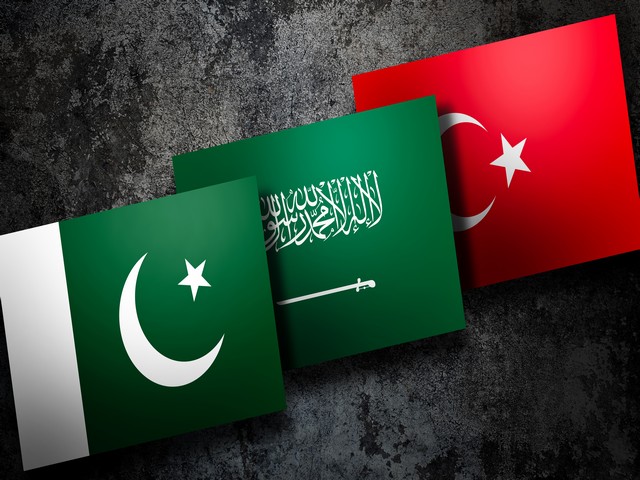
On August 7, 2026, Turkey, Saudi Arabia, and Pakistan signed a mutual defense agreement in Mecca under which an armed attack on one would be considered an attack on all three. Turkish Foreign Minister Hakan Fidan even compared its central provision to Article 5 of the North Atlantic Treaty. The new alliance is to establish a ministerial committee and a permanent secretariat in Saudi Arabia, and has been presented as open to additional members.
The agreement developed out of the Saudi–Pakistani defense pact and Turkey’s efforts to expand it into a broader trilateral framework. It appears, first and foremost, to be a response to the danger Iran poses to the region and to growing doubts about the reliability of the American security umbrella. Yet Ankara’s assurances that the alliance is not directed against any particular country cannot reassure Israel. The Erdoğan government’s overt hostility toward Israel, its support for Hamas and the Muslim Brotherhood, its activities in Syria, and Ankara’s ambition to establish hegemony in the Eastern Mediterranean all require Israel to assume that this new concentration of power could also be directed against it, whether directly or indirectly.
The agreement did not originate in the regional war that erupted on February 28, 2026. Talks on a trilateral pact had been underway for many months. The war, however, accelerated its development and gave it new urgency. Iranian attacks on Saudi Arabia and other Gulf states, together with the disruption of shipping and energy supplies through the Strait of Hormuz, demonstrated to Riyadh that it could pay a heavy price for a conflict it had not initiated. The Mecca Pact is therefore both a product of doubts about the credibility of the American security umbrella and a response to the regional consequences of the war with Iran.
At first glance, this appears to be a dramatic shift in the regional balance of power. Turkey brings a large military, a growing defense industry, and NATO membership; Pakistan brings a large army and nuclear capability; and Saudi Arabia brings economic resources, standing in the Muslim world, and a strategic location astride key energy and trade routes. But before concluding that a “Muslim NATO” has been born, it is worth recalling the history of defense alliances in the Middle East.
The Graveyard of Defense Alliances
Following the failure of the Arab armies in the 1948 war, the Arab League states signed the Treaty of Joint Defense and Economic Cooperation in 1950. The treaty declared that aggression against one member would be considered aggression against them all, and established a Joint Defense Council and a military committee. On paper, an Arab alliance had been created. In practice, there was no unified command, no common doctrine, no permanent allocation of forces, and no demonstrated willingness by member states to subordinate their separate interests to the defense of another member.
The Baghdad Pact was established in 1955 by Turkey, Iraq, Iran, Pakistan, and the United Kingdom. It was intended to form a “northern tier” containing the Soviet Union. After the 1958 revolution in Iraq, Baghdad withdrew and the pact became CENTO. Pakistan sought help from its allies in its wars with India in 1965 and 1971 – and received none, because the other members maintained that the alliance had been created to contain Moscow, not to fight India. The Iranian Revolution brought about its final dissolution in 1979.
An Egyptian-Syrian-Saudi alignment arose in the 1950s as a counterweight to the Baghdad Pact, but inter-Arab rivalries proved stronger than declarations of unity. The United Arab Republic of Egypt and Syria collapsed after three years. The Unified Arab Command, proclaimed in 1964, never created a genuine joint war command. The Arab coalitions of 1948, 1967, and 1973 managed to concentrate forces for particular wars, but they were ad hoc coalitions – not regional defense alliances with enduring institutions, plans, and commitments.
The Gulf Cooperation Council was established in 1981, followed by the Peninsula Shield Force in 1984. This has been the region’s most durable security framework, yet it failed to prevent Iraq’s conquest of Kuwait in 1990; Kuwait was liberated only by an international coalition led by the United States. Peninsula Shield was deployed to Bahrain in 2011, but to protect the regime and critical infrastructure against an internal threat believed to enjoy external support – not to fulfill the classic purpose of joining a war against a state that had attacked an alliance member.
The 1991 Damascus Declaration, intended to connect the six Gulf states with Egypt and Syria in an Arab security system, likewise became an empty shell. The proposed Joint Arab Force of 2015 never materialized. The American-backed Middle East Strategic Alliance – MESA, or the “Arab NATO” – proposed after 2017 was never established. The Islamic Military Counter Terrorism Coalition maintains a headquarters in Riyadh, but it is neither a mutual defense alliance nor a joint Muslim army.
The lesson is not that alliances are worthless. It is that proclaiming an alliance does not create one. The region has never lacked treaties. What it has lacked is an agreed enemy, a unified command, operational planning, forces assigned in advance, and above all a willingness to go to war on behalf of another member. None of the region’s defense alliances has consistently fulfilled the purpose for which it was created: coming to the aid of a member under attack, or establishing a permanent mechanism through which a coalition could jointly remove an existential threat to one of its members. The Mecca Pact may repeat that history. Israel, however, cannot afford to assume that it will.
What the Pact Means for Israel: National Defense
From the standpoint of national defense, the Mecca Pact creates a potential direct and indirect threat to Israel. This does not mean that the Turkish, Saudi, and Pakistani armies will stand together against Israel tomorrow morning. Nor does it mean that Pakistan has automatically extended a nuclear umbrella to Saudi Arabia or Turkey. But Israel must plan on the basis of potential capabilities, not reassuring declarations.
The danger is particularly complex because Turkey is a member of NATO. Article 5 does not apply to Saudi Arabia or Pakistan, and they do not inherit its protection through Ankara. A Turkish-Israeli confrontation, however, could produce a chain reaction: Israel might be compelled to neutralize a Turkish threat; Turkey could portray Israel’s action as aggression; Saudi Arabia and Pakistan could then be called upon to act under the Mecca agreement; and Ankara could seek to activate NATO’s consultation and defense mechanisms. Even if the United States and European governments prevented a NATO war with Israel, the mere possibility would restrict Israel’s freedom of action and give Turkey a dangerous sense of immunity.
Growing Turkish influence in Syria compounds the risk even without formal Syrian membership in the alliance. Ankara’s political, economic, and military support for Damascus could extend Turkish power – and, in a crisis, the weight of the Mecca Pact – toward Israel’s northern border. This scenario must now be incorporated into Israeli planning.
The IDF and Israel’s defense establishment must therefore incorporate the new alliance into their strategic assessments, force design, intelligence collection, home-front defense, infrastructure protection, and operational planning. Israel’s historic policy has not been to wait until an existential threat had fully developed and was turned against it. It has sought to remove threats while they were still in their infancy, when they could still be eliminated through a short, decisive war beyond Israel’s borders rather than through a prolonged war of attrition within them.
This is not an automatic call for preventive war. It is a demand to maintain a ready capacity for decisive action – and the freedom to use it – when a threat becomes real, grave, and imminent, and when waiting for the first blow could deprive Israel of the ability to defend itself. Israel cannot allow Turkey’s NATO membership, combined with the Mecca Pact, to shield an emerging threat from an Israeli response.
The threat therefore requires two distinct responses at two different levels. The first, at the level of national defense, is military: the IDF must possess the capacity to thwart threats originating in Turkey, whether directly or through an escalation chain activated by the Mecca Pact. This response cannot be made contingent on the success of any diplomatic initiative. The second response, at the level of national security, is intended not merely to remove a threat after it has matured, but to reshape over time the conditions and incentives that allow it to emerge. This is less obvious – and more important.
Not a Counter-Alliance, but an Organization That Builds Security
A military response is essential but insufficient. It can stop threats as they mature; it does not change Turkey’s incentive to generate them in the first place. The automatic response might be to create a countervailing defense alliance – and that would be a mistake. India is reluctant to enter alliances that obligate it to go to war; Greece is a member of NATO alongside Turkey; Cyprus is geographically important but militarily limited; and Arab states will not want to join a framework defined from the outset by its opposition to Turkey.
Instead of a defense alliance, Israel should initiate an organization for security and prosperity. The distinction is not semantic. Military defense asks how we will fight after war has broken out. National security asks how to create the diplomatic, military, economic, energy, scientific, and technological conditions that deny an adversary the ability – or the desire – to start one.
The proposal must confront an obvious difficulty. If the lesson of the historical graveyard is that declarations do not create alliances, what would prevent the proposed organization from joining the list of failures – MESA, the Damascus Declaration, and the Joint Arab Force? The answer must be structural, not rhetorical. Those initiatives failed because they sought to secure advance commitments to fight without a shared, everyday interest that justified their existence in peacetime. The organization proposed here would reverse that order. It would be built around functioning economic infrastructure – IMEC, ports, data cables, and energy networks – that provides a reason to exist even in the absence of an immediate threat. Membership would be valuable in its own right, not merely as insurance against a future war. This is the difference between an alliance that attempts to invent solidarity out of nothing and a framework that anchors an existing common interest.
The organization’s core membership could include India, Israel, Cyprus, Greece, and the United Arab Emirates. Jordan is essential for land continuity; France and Italy can serve as European gateways; the United States can provide external backing in a format similar to the 3+1 framework; and Egypt can contribute the Suez Canal, the Red Sea, and its weight in the Eastern Mediterranean. Saudi membership should also be welcomed – even though Riyadh is a member of the Mecca Pact. Its inclusion would demonstrate that the organization is directed neither against Islam, nor against Sunni states, nor even against Turkey, but in favor of freedom of transit, diversified centers of power, and resistance to regional coercion.
The organization could operate in seven complementary fields: diplomatic coordination; intelligence and infrastructure protection; freedom of navigation; railways, ports, and logistics centers; electricity, gas, hydrogen, and energy storage; data cables and cybersecurity; and joint research in water, agriculture, space, health, and artificial intelligence. It does not need a clause declaring that an attack on one is an attack on all. It would be sufficient to establish that a deliberate attack on the infrastructure, port, cable, pipeline, or freedom of movement of one member constitutes a threat to the security and prosperity of all – and will be met by coordinated diplomatic, economic, technological, and, where necessary, security measures.
Turkey and Pakistan may read the proposed configuration – India, Israel, Greece, and Cyprus – as a counter-alliance in practice, just as Turkey itself insists that the Mecca Pact is directed against no one. That suspicion cannot be dispelled by a declaration. It can be reduced by keeping the door genuinely open to Saudi Arabia and other states, and by allowing limited Turkish participation in civilian projects in which Ankara has no veto over the corridor as a whole. This would preserve the distinction between an open organization that builds security and a confrontational military bloc.
The Mecca Pact begins with a promise to go to war and hopes that partnership will grow from it. The proposed organization would begin with a real partnership, from which the ability to prevent war – and to confront it if imposed – would grow.
Two Alignments, Two Corridors
Two economic initiatives – the western IMEC route through Israel and the Turkish routes through Iraq and Syria – are competing to shape one of the century’s most important projects: connecting the Indian Ocean basin with the Atlantic basin. The Mecca Pact did not create this competition, but it gives Turkey additional regional standing and instruments of influence that may help it tip the balance toward routes passing through its territory. This is the connection between the two alignments: not a military alliance confronting another military alliance, but growing Turkish diplomatic and military power confronting a security-economic organization that would guarantee an alternative Ankara cannot block.
The original route of the India-Middle East-Europe Economic Corridor (IMEC) is intended to link Indian ports to the Gulf, and from there by rail through the UAE, Saudi Arabia, and Jordan to Israel. From Israeli ports, cargo would continue by sea to Cyprus, Greece, and Europe. This is not merely a freight route. The plan has the potential to carry electricity and energy, clean hydrogen, data, and communications, and to create joint production and research chains.
Turkey, by contrast, is advancing several alternative and complementary routes united by one principle: there can be no corridor without Turkey. The Development Road is intended to connect the Grand Faw Port in Basra through Iraq to Turkey and Europe. Rail, gas, and oil links through Syria are also being promoted, together with revived routes reaching Syrian or Lebanese ports and from there, directly or through Turkey, to the European market. These plans have not yet coalesced into a single defined corridor, but they express one strategy: to make Turkey the indispensable gateway between the Gulf, Asia, and Europe, and to push Israel out of the intercontinental link. Such routes would increase Ankara’s power of coercion over Europe – not only through potential control over migration flows, but also by turning Turkey into a central gateway for energy and trade.
Here the profound difference between the two visions becomes clear. The route through Israel rests largely on stable states and existing partnerships. At its two strategic ends stand democratic bridgeheads: India in the east and Israel in the west. Between them lie the UAE, Saudi Arabia, and Jordan, whose governments control their territory and are capable of protecting long-term infrastructure. Beyond Israel lie Cyprus and Greece, members of the European Union or closely tied to it and to the West.
The routes promoted by Turkey pass, at least in part, through Iraq, Syria, and Lebanon – weak or failed states where terrorist organizations, militias, and foreign forces operate. They terminate in Turkey, a democracy on paper in which the separation of powers, freedom of the press, and the rule of law have been eroded. Turkey is already a major transit hub for energy flowing to Europe. Increasing Europe’s dependence on it would further concentrate power in Ankara’s hands – power that could be converted into diplomatic and security pressure.
One of IMEC’s strategic advantages is that it would provide an additional route between the Indian and Atlantic Ocean basins without increasing dependence on Russia, China, Iran, or Turkey. This does not mean that the Israeli route is immune to disruption. It is exposed to risks in Jordan, the Red Sea, the Gulf, and Israel itself; without diplomatic arrangements and enormous investment, it will remain a line on a map. The Iraqi-Turkish route also enjoys the advantage of overland continuity.
A central lesson of the war with Iran is the need to avoid dependence on a single route or source. Even if a decision is made to develop an eastern route through Turkey, Israel must persuade the partners – above all Europe, the United States, and India – to establish the western alternative in parallel. Precisely because no corridor is invulnerable, Europe and India must not depend on a single gateway. Security in the twenty-first century is built through alternatives, redundancy, and diversification – not by handing the key to a single transit state.
Not Against Turkey – Against Its Capacity to Coerce
The proposed organization should not define Turkey as an enemy. Such a definition would drive away India, the UAE, Egypt, and perhaps Greece as well; strengthen Ankara’s claim that it is being encircled; and turn the corridor from an international enterprise into an instrument of regional confrontation.
The organization’s purpose should be positive and clear: connecting India to Europe; ensuring freedom of navigation and trade; diversifying energy sources and routes; protecting infrastructure; advancing science and technology; and preventing any single state from acquiring the power to block the link between the two ocean basins or condition its use on political submission.
For precisely this reason, the door should remain open to Saudi Arabia. Riyadh should not have to choose between a defense agreement with Turkey and Pakistan and participation in an economic-security system with India, Israel, and Europe. On the contrary, membership in both frameworks could prevent the Mecca Pact from becoming an anti-Israel alliance and ensure that the original corridor is not displaced from its planned route. It would allow Saudi Arabia to diversify its strategic partnerships rather than replace dependence on the United States with dependence on Turkey.
Europe, too, must understand its interest. The Mecca Pact could one day confront it with the task it finds most difficult of all: war. A Turkish-Israeli confrontation could draw NATO into a crisis it did not choose. A multidimensional security organization, by contrast, would provide Europe with alternative energy and trade routes, reduce its dependence on Ankara, and create consultation and deconfliction mechanisms before a crisis becomes a war.
An Israeli National-Security Response
Israel must prepare a military response to the Mecca Pact. That is a state’s first duty to its citizens. But if it confines itself to building another squadron, another interceptor system, or another contingency plan, it will answer the challenge only at the level of national defense and forfeit the opportunity it creates at the level of national security.
The Mecca Pact seeks to combine Turkish military power, Pakistani capability, and Saudi resources. Israel’s proper response is to connect Indian power, Israeli innovation, the Greek-Cypriot position, Gulf capital and infrastructure, and European and American backing. The purpose is not to create one bloc that goes to war against another, but to build a regional order in which Turkey, Iran, or any other power cannot impose its will on its neighbors or on Europe.
This is the difference between a state that merely reacts to threats and one that changes the agenda. Against an alliance intended – at least ostensibly – to defend its members after war breaks out, Israel should initiate an organization that builds security before war begins. Against the attempt to divert the India–Europe connection toward Turkey, Israel should transform IMEC from a transportation project into the infrastructure of a new regional order.
If the national-security response succeeds – if the IMEC route through Israel is built, strengthened, and proves its value – it may also alter the Mecca Pact’s role over time. An alliance that cannot serve as an instrument for bypassing Israel or exerting pressure on it may be confined to its declared purpose: defending its members against Iran and its proxies. That is the desired strategic end state – not defeating or dismantling the alliance, but preventing it from becoming an anti-Israel pact. If a genuine convergence of interests regarding Iran emerges in the future, Israel could consider limited cooperation with its members, without joining the alliance or entrusting its security to it.
The defense alliances established in the Middle East disappeared because they promised to fight together without building a shared life. The new organization must proceed in the reverse order: build shared interests, infrastructure, knowledge, and power – and from them generate security. If it does, the Mecca Pact will not merely be another threat born in the Middle East. It will become the catalyst for Israel to regain the initiative in shaping the region.
*The opinions expressed in Misgav publications are the authors’ alone.