

When hostile regimes declare their intention to destroy the Jewish state, the country has the right and duty to take preventive action.
Prof. Zaki Shalom
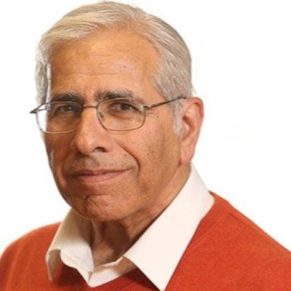
Prof. Zaki Shalom
A member of the research staff at the Institute for National Security Studies and a Prof. Emeritus at Ben Gurion University. He has published extensively on various facets of Israel's defense policy, the Arab-Israeli conflict, and the role of the superpowers in the Middle East, and Israel's struggle against Islamic terror. His work has also focused on the study of Israel's nuclear option, both in historical and contemporary perspectives. He is the author of numerous articles and several books, including Israel's Nuclear Option: behind the Scenes Diplomacy between Dimona and Washington (Sussex Academic Press and Jaffee Center for Strategic Studies, 2005), and Ben-Gurion's Political Struggles, 1963-1967: A Lion in Winter (Routledge, Taylor & Francis Group, 2006). In 2007 he was awarded the prime minister's prestigious David Ben-Gurion memorial prize for his book Fire in His Bones, which deals with Ben-Gurion's activities following his resignation as prime minister and until his death.
Israel-US Relations, Security Policy from a Historical Perspective, Israeli Leadership in Times of Crisis

A member of the research staff at the Institute for National Security Studies and a Prof. Emeritus at Ben Gurion University. He has published extensively on various facets of Israel's defense policy, the Arab-Israeli conflict, and the role of the superpowers in the Middle East, and Israel's struggle against Islamic terror. His work has also focused on the study of Israel's nuclear option, both in historical and contemporary perspectives.
He is the author of numerous articles and several books, including Israel's Nuclear Option: behind the Scenes Diplomacy between Dimona and Washington (Sussex Academic Press and Jaffee Center for Strategic Studies, 2005), and Ben-Gurion's Political Struggles, 1963-1967: A Lion in Winter (Routledge, Taylor & Francis Group, 2006). In 2007 he was awarded the prime minister's prestigious David Ben-Gurion memorial prize for his book Fire in His Bones, which deals with Ben-Gurion's activities following his resignation as prime minister and until his death.
-
-
The alliance between Israel and the United States has long been a cornerstone of Israel’s national security. For decades, it has provided Israel with diplomatic backing, military assistance, intelligence and …
-
What message does Washington send to its allies if it implies that a powerful partner such as Israel is so vulnerable that it must accept every demand made by its protector?
-
We are entitled to be angry with the American president. We are entitled to feel disappointed. But anger is not a strategy, and disappointment is not a substitute for self-examination. Neither relieves us of the responsibility to confront our own decisions and mistakes.
-
A weakened Hamas, expanding Israeli control, and regional backing are reshaping Gaza’s future.
-
Regional actors believe that in the event of a direct confrontation with China, the US would act with extreme caution and seek to avoid a large-scale war whenever possible.