

 Meir Ben Shabbat

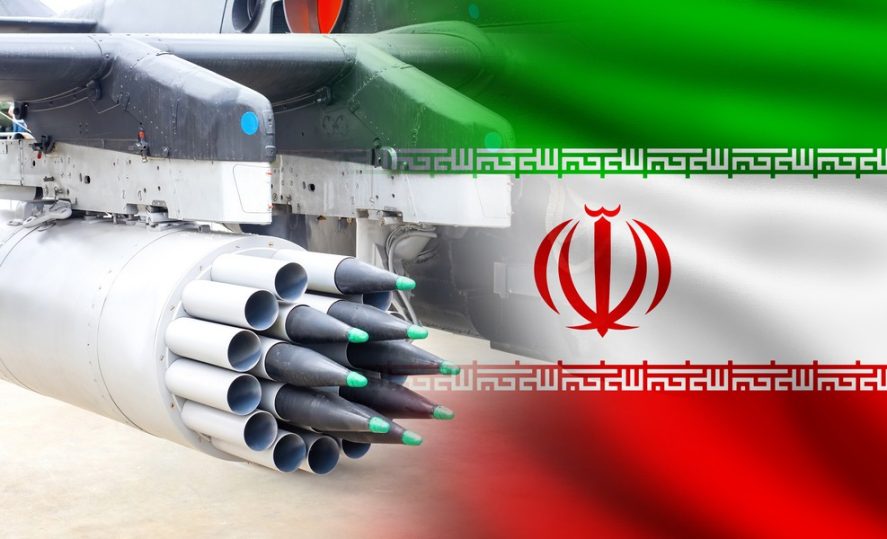


The statement by Tehran’s Assembly of Experts, a public campaign in Iran, and concerns over losing track of enriched uranium paint a troubling picture. The Mossad chief has traveled to the United States with a message: a strategy of slow strangulation is not enough.
“The current situation of ‘neither war nor peace’ will not continue,” Iranian Parliament Speaker Mohammad Baqer Qalibaf warned. According to Qalibaf, the “missile city” unveiled by Iranian forces reflects a shift in the region’s strategic calculus. He reiterated a threat recently voiced by senior regime officials: any resumption of hostilities would expand the conflict beyond its current geographic boundaries.
A day earlier, Iranian television reported that extending the range of Iran’s domestically produced Khorramshahr missiles would not be particularly difficult, enabling them to target American military bases in Europe as well.
This appears to be Tehran’s response to remarks made by Donald Trump over the weekend. In an interview with commentator Stephen A. Smith, the US president explained that he was pursuing a slower, more measured approach toward Iran at the request of America’s allies in the Middle East. He argued that, given the severe damage already inflicted on Iran’s capabilities, there was no urgency to take more drastic measures.
But that assessment is being challenged not only by reports that Iran is rapidly rebuilding its missile arsenal, but also by developments concerning the issue at the heart of the confrontation: its nuclear program.
“Not a single particle of enriched nuclear material will leave the country,” declared Mohsen Rezaei, secretary of Iran’s Supreme National Security Council, who was expected to lead negotiations with Vice President JD Vance. His remarks could have been dismissed as part of Iran’s arrogant rhetoric or as an opening negotiating position. But they do not stand alone.
Iran’s Assembly of Experts, the body responsible for appointing and overseeing the supreme leader, issued a statement last Thursday declaring that a reassessment of the country’s defense doctrine and the establishment of the necessary deterrence had become an “unavoidable necessity” and a “popular and national demand.” Again: an “unavoidable necessity”!
Alongside this call, the Assembly also recommended considering Iran’s withdrawal from the Treaty on the Non-Proliferation of Nuclear Weapons (NPT).
The phrase “a reassessment of the defense doctrine” is a euphemism for the possibility of moving toward the development of nuclear weapons “for deterrence purposes.” The Assembly of Experts’ statement echoes remarks made in recent years by Kamal Kharazi, an adviser to the previous supreme leader, Ali Khamenei.
Kharazi maintained that Iran possesses the technical capability to develop nuclear weapons but has not yet made the decision to do so. He added that if Iran were to face an existential threat, it would be compelled to take that step — or, in his words, to “change its nuclear doctrine.”
Similar remarks were made about a week ago by Mohammad-Javad Larijani, a figure close to the regime who heads Iran’s Institute for Research in Fundamental Sciences. According to Larijani, the only thing standing between Iran’s existing capabilities and a nuclear weapon is an explicit order from the supreme leader.
The Assembly of Experts’ declaration lends substantial religious and institutional backing to those calling for a more extreme nuclear policy.
These calls come amid a broad public campaign in Iran, led by the Islamic Revolutionary Guard Corps, aimed at normalizing the idea of nuclear weapons in the public consciousness. Preachers, opinion leaders, and self-appointed spokespeople are urging the regime to go a step further. This is the popular dimension referenced in the Assembly of Experts’ statement.
These developments must also be considered alongside remarks made by Prime Minister Netanyahu in a video released on Saturday evening: “The Iranian regime, which seeks Israel’s destruction, is once again working to revive its nuclear program.” This follows a warning he delivered about a month ago at an officer graduation ceremony at the IDF’s Officers’ School. Referring to Mojtaba Khamenei, Netanyahu declared: “He has pulled the safety pin, and Iran is attempting once again to develop the bombs of death.”
A confidential report circulated several days ago by the International Atomic Energy Agency (IAEA) to its member states warned that the agency had “lost track of hundreds of kilograms of enriched uranium.”
These concerns are further reinforced by the US State Department’s announcement of a reward of up to $20 million for anyone providing intelligence on Iran’s nuclear program.
Unless there is evidence to the contrary, these developments point to two troubling conclusions. First, the Iranian regime appears to be moving toward the development of nuclear weapons. Second, it is far from clear that the United States and the international community have sufficient control over the situation.
The concern that Iran could exploit the absence of fighting to quietly advance toward nuclear weapons is far from exaggerated.
This makes Mossad Director Roman Gofman’s visit to the United States especially important. His primary mission was to convince his American counterparts that, despite the advantages of a strategy of economic strangulation, the threat posed by Iran’s growing military capabilities — particularly in the nuclear sphere — makes a slow, measured approach untenable.
Equally significant is the meeting between Prime Minister Netanyahu and Yashar! party chairman Gadi Eisenkot. The most pressing challenge facing both leaders is to preserve the cohesion of Israeli society and its willingness to continue standing together in the face of whatever hardships may lie ahead.
Published in Israel Hayom, November 18, 2026.
*The opinions expressed in Misgav publications are the authors’ alone.