

 Dr. Yossi Mansharof



Key Takeaways
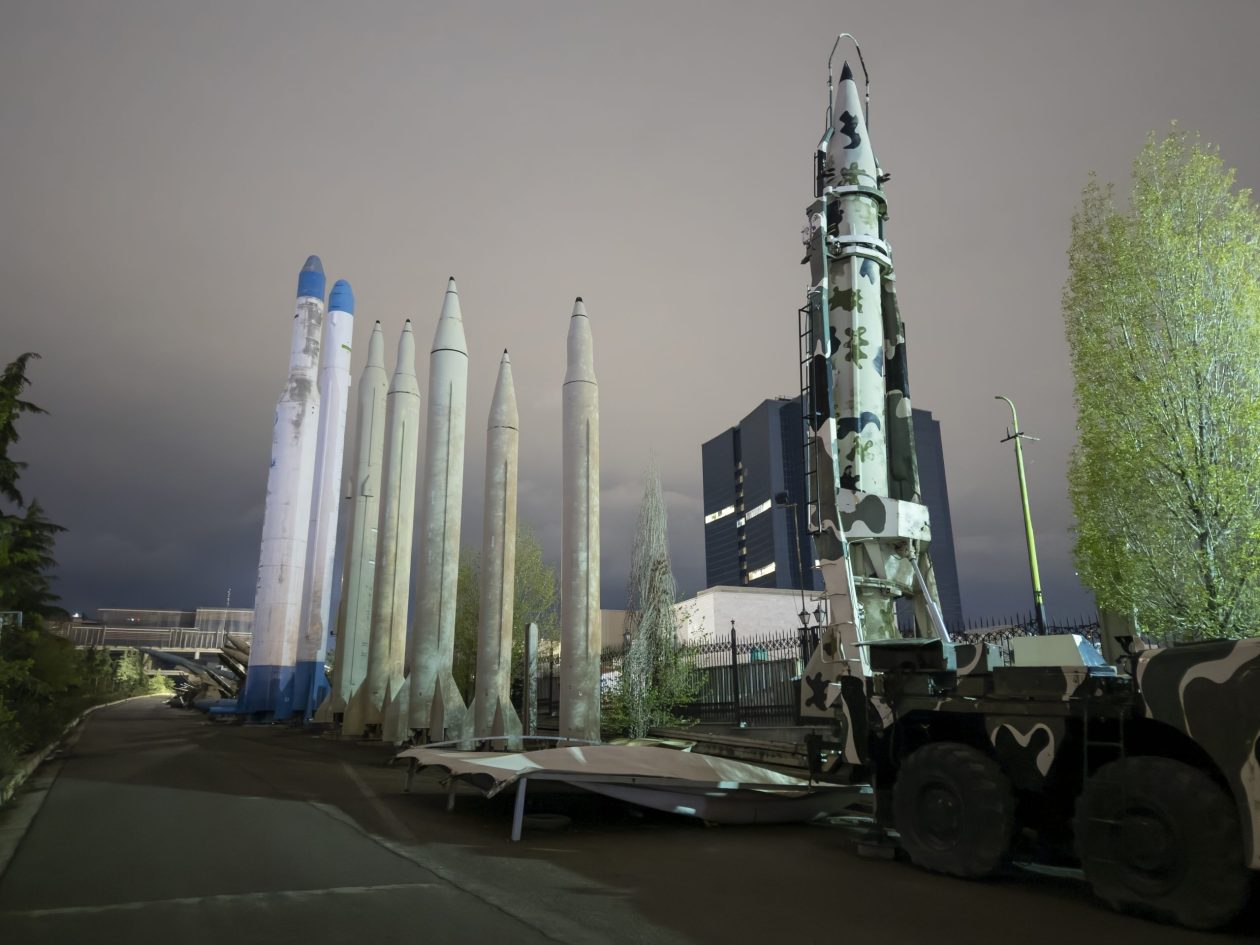
- Iran is expanding its deterrence strategy, shifting from a focus on the regional arena to threatening U.S. military bases in Europe and, potentially, more distant targets.
- Iran’s leadership is signaling that, in the event of renewed war, its response will not be geographically limited. Alongside missile threats, senior Iranian officials are also threatening to target strategic infrastructure, including communications cables, data centers, and artificial intelligence facilities.
- The threat to Europe could also take the form of drone attacks. Reports of alerts and heightened readiness at British military bases illustrate that concerns extend beyond long-range missiles.
- Senior Iranian officials have expressed ambitions to develop intercontinental ballistic missiles, with ranges that could eventually reach Europe and the United States. However, at present, there is no credible public evidence that Iran possesses a missile capable of striking U.S. territory.
- Long-range missiles could take on additional significance if Iran develops nuclear weapons in the future. They could serve as delivery systems, potentially giving the nuclear threat, if realized, a global reach.
- From Tehran’s perspective, its missile program is a central component of national security and its ability to deter the United States and Israel. Therefore, the likelihood of Iran agreeing to significant restrictions on the program through negotiations appears low.
- An agreement focused on Iran’s nuclear program and freedom of navigation through the Strait of Hormuz, while leaving its missile program and network of proxies outside the negotiations, could allow Iran to retain the primary tools for expanding its threat capabilities and raising the costs of a future confrontation.
Introduction
The evolution of the Islamic Republic of Iran’s security doctrine signals an expansion of its deterrence strategy, extending beyond the regional arena toward more distant targets. This development stems from lessons Tehran has drawn from the war, during which its missile capabilities stood out as a key source of strength for the regime. Iran’s senior leadership and military command are signaling a willingness to broaden the scope of the conflict in the event of renewed war, including by threatening U.S. military bases in Europe. At the same time, statements by senior Iranian officials indicate an ambition to develop long-range ballistic missiles capable of eventually striking U.S. territory.
However, it is important to distinguish Iran’s development ambitions and threats from its demonstrated operational capabilities. At present, there is no credible public evidence that Iran possesses a missile capable of reaching the United States. The growing missile threat from Tehran highlights the cost of American procrastination, as the Trump administration focuses on reopening the Strait of Hormuz and addressing Iran’s nuclear program while leaving its missile program and support for its network of proxies off the negotiating table.
Mojtaba Khamenei’s Deterrence Doctrine: No Geographic Limitations
At the heart of Iran’s preparations for a renewed military confrontation are the directives of Supreme Leader Mojtaba Khamenei, who also serves as supreme commander of the armed forces. During a meeting with senior security officials in late October 2026, attended by Chief of Staff of the Armed Forces Ali Abdollahi, Army Commander Amir Hatami, and Islamic Revolutionary Guard Corps (IRGC) Commander Ahmad Vahidi, Mojtaba ordered preparations for an immediate, effective response “without geographic limitations” in the event of renewed war. He added that Iran would determine when the war would end and under what conditions. As the Supreme Leader’s office explained, his statement signaled Iran’s intention to extend the range of its missiles to threaten Europe and even targets beyond it.
A practical demonstration of the expanded deterrence doctrine that Mojtaba sought to establish came on November 10, when Armed Forces Chief of Staff Abdollahi visited an underground IRGC “missile city” unveiled that same day. During the visit, Abdollahi warned that an attack on Iran would be met with a response extending beyond the region and that Tehran had upgraded its missile warheads to make them more destructive. These statements point to an Iranian effort to convey not only its willingness to expand the geographic scope of a confrontation but also improvements in the firepower it intends to use to carry out its threats.
Mojtaba’s declaration regarding the expansion of Iran’s deterrence reach appears intended to publicly reflect lessons Tehran drew following Operation Rising Lion. As early as October 2025, four months after the operation, Ahmad Bakhshayesh Ardestani, a member of the Iranian parliament’s National Security and Foreign Policy Committee, revealed in an interview with Iranian media that then-Supreme Leader Ali Khamenei had lifted his previously imposed restriction limiting Iran’s missile range to 2,200 kilometers. Ardestani stated that Iran was “now developing its missile program as far as it wishes,” because it needed to “strengthen its most important source of military power, namely its missile program.”
In addition to ordering an expansion of Iran’s missile threat, Supreme Leader Mojtaba instructed senior defense officials to raise military readiness levels, declaring that “intelligent combat readiness is a prerequisite for achieving maximum deterrence.” Mojtaba’s insistence on maintaining Iran’s seven conditions for resuming negotiations, which effectively amount to an American surrender, was clearly reflected in his latest message on November 4, marking the anniversary of the seizure of the U.S. Embassy in Tehran.
The message included a warning that Iran would expand the conflict to “far greater dimensions” if war resumed. Against the backdrop of deep suspicion and mistrust between Tehran and Washington, Mojtaba expressed his opposition to making even minimal concessions in negotiations, arguing that the United States seeks to subjugate Iran and that any such concession would only encourage Washington to make additional demands. Under these circumstances, the scope for agreement between Iran and the United States appears limited. Meanwhile, as Trump relies on the impact of the naval blockade and deliberates whether to resume the war, Tehran is concentrating on strengthening its deterrence capabilities.
Expanding the Conflict: Europe and Strategic Infrastructure on Iran’s Target List
Regime mouthpieces have announced Iran’s intention to target undersea communications cables in the Persian Gulf as part of Tehran’s efforts to maximize damage to its adversaries in the event of renewed war. In this context, Mohsen Rezaei, Secretary of Iran’s Supreme National Security Council, warned on October 11 that if war resumed, Iran would destroy communications cables, data centers, and artificial intelligence facilities in the region, which he claimed were worth more than $2 trillion. He specifically mentioned American assets in the United Arab Emirates and near the Strait of Hormuz, which he claimed had not yet been included on Iran’s target list.
Beyond this, a central component of Iran’s updated strategy is to exert pressure on the United States by threatening its European allies with missile strikes. The conservative daily Hamshahri published a detailed map on November 3 identifying U.S. and NATO military installations across Europe as potential targets in the event of renewed war. Published against the backdrop of Mojtaba Khamenei’s directive to respond without geographic limitations, the map illustrates Iran’s efforts to extend its threats to military bases and infrastructure beyond the Middle East.
The Iranian threat to Europe is not limited to long-range ballistic missiles but could also involve the use of drones against military bases used by the United States and its allies. In September 2026, American and British intelligence officials warned of a possible drone attack against U.S. bombers stationed at RAF Fairford. In November, reports indicated that alert levels had been raised at the British bases of Mildenhall and Lakenheath following intelligence warnings of a possible attack by suicide drones. U.S. aircraft were also reportedly relocated from Mildenhall to bases in Germany and Spain. These reports illustrate that concerns about the Iranian threat to Europe extend beyond increasing missile ranges to include the potential use of drones against Western military assets.
Alongside the expansion of its threats, Iran continues to maintain a substantial missile arsenal despite the damage it sustained during the war. According to U.S. intelligence community assessments, Tehran retains between 1,500 and 2,500 missiles. Israeli military officials similarly estimate that Iran possesses more than 1,500 ballistic missiles, although regional assessments of the full size of Iran’s stockpile continue to vary. Simone Ledeen, who served as Deputy Assistant Secretary of Defense for the Middle East during the first Trump administration, noted that even the lowest estimate of 1,500 missiles indicates that Iran has managed to rebuild more than half of its estimated prewar missile stockpile. It can be assessed that only a small portion of Iran’s arsenal consists of missiles with sufficient range to strike targets in Europe. Nevertheless, even this limited capability extends Tehran’s deterrence reach beyond the Middle East.
Iran’s intention to strike Ukraine with missiles last summer demonstrated its willingness to expand the scope of the conflict beyond the Middle East. On July 25, 2026, Ukrainian forces attacked an Iranian vessel in the Caspian Sea, which Tehran claimed was carrying civilian cargo, killing one crew member. Ukraine maintained that the vessel had been used to transport military components from Iran to Russia. In response, Tehran reportedly considered launching ballistic missiles at three targets in Ukraine, apparently including a Black Sea port, as an act of retaliation and a demonstration of force. However, after Kyiv clarified during a conversation between the two countries’ foreign ministers that the attack had been unintentional and that Ukraine did not seek escalation, Tehran decided to suspend its response. Mohsen Rezaei, who at the time served as an adviser to Supreme Leader Mojtaba Khamenei, revealed Iran’s intentions and preparations for the strike in an interview with Iranian media on August 3. The distance between Iran and Ukraine is approximately 2,300 kilometers, illustrating the geographic reach to which Tehran sought to extend its missile threat.
In recent weeks, Mohsen Rezaei, former Foreign Minister and current member of parliament Manouchehr Mottaki, and Mohammad Javad Larijani, one of the regime’s most prominent mouthpieces, have explained the rationale behind Iran’s threats against Europe in interviews. According to these officials, if European countries allow the United States to use military bases on their territory to launch attacks against Iran, these countries could themselves become targets. The threat is intended, in part, to encourage European governments to pressure Washington and prevent a resumption of the war. Through this strategy, Tehran seeks to extend the costs of confrontation beyond the Middle East and undermine the willingness of U.S. allies to assist Washington.
Ambition to Develop Intercontinental Missiles
Iranian statements regarding the development of intercontinental missiles underscore Tehran’s ambitions for its missile program. In early June, Iranian media reported that 85 members of the Majlis had sent a letter to Supreme Leader Mojtaba Khamenei requesting authorization for Iran’s defense industries to develop intercontinental missiles. In addition, during a speech at a regime conference in November 2026, Amir Hayat-Moghaddam, Deputy Chairman of the Majlis National Security and Foreign Policy Committee and former Deputy Commander of the IRGC Air Force, expressed his aspiration for Tehran to produce intercontinental ballistic missiles. He also described discussions he had held on the matter with incoming Defense Minister Mehrdad Akhlaghi, who had himself participated in significant projects within Iran’s missile program and was consequently subjected to sanctions by the United States, the United Nations, and the European Union.
In his speech, Hayat-Moghaddam outlined a phased development plan, beginning with missiles capable of reaching 6,000 kilometers, followed by an expansion of their range to 10,000, 12,000, and eventually 15,000 kilometers. Under the commonly accepted definition, an intercontinental ballistic missile (ICBM) is a missile with a range exceeding 5,500 kilometers. Accordingly, the program described by Hayat-Moghaddam would cross the conventional threshold for an ICBM in its very first phase, with the development of missiles capable of reaching 6,000 kilometers. Such ranges could enable Iran to strike targets in Europe and, eventually, U.S. territory.
Contrary to statements by Foreign Minister Abbas Araghchi, who told Al Jazeera in early February 2026 that Iran lacked the capability to strike the United States directly with missiles and would therefore target American bases in the region, Kamran Ghazanfari, a member of the Majlis from the radical conservative camp, claimed in a November 3 interview that Iran already possesses intercontinental missiles capable of reaching the United States and would strike American territory if war resumed. However, his remarks appear primarily intended to strengthen Iran’s deterrence, reflecting an understanding that its missile capabilities are currently Tehran’s main source of leverage.
The significance of Iran’s ambition to develop intercontinental missiles becomes particularly apparent when considering the possibility that these missiles could eventually serve as delivery platforms for nuclear warheads, should Iran decide to develop nuclear weapons. Intercontinental ballistic missiles are among the principal delivery systems employed by nuclear powers. Developing such a capability could therefore give Iran’s nuclear program, if it ultimately produces weapons, a global strategic dimension. In this sense, the ambition to develop long-range missiles is not merely an effort to expand the reach of conventional deterrence but also carries potential implications in the nuclear domain.
A U.S. intelligence assessment published in May 2025 concluded that Iran could develop a militarily viable intercontinental ballistic missile by 2035 if it decided to pursue such a program. This assessment was reiterated in the U.S. intelligence community’s annual report in March 2026. By contrast, Trump’s February 2026 statement that Iran was developing missiles that would soon be capable of reaching the United States was not supported by U.S. intelligence assessments, according to Reuters. Thus, although the threat is not currently operational, the possibility that Iran could acquire an intercontinental missile capability within the next decade is regarded in the United States as a scenario requiring preparation. Given Iran’s growing motivation to strengthen its missile deterrence capabilities, it cannot be ruled out that Tehran will accelerate its development efforts, shorten the timeline for achieving an intercontinental capability, and acquire it before 2035.
In this context, it is worth recalling that during his remarks at a June 17, 2026, press conference following the G7 summit in France, Trump acknowledged Iran’s right to possess ballistic missiles. In doing so, he demonstrated weakness in confronting one of the central pillars of Iran’s military power and leverage. Recognizing Iran’s right to possess missiles without establishing clear conditions limiting their range and capabilities could be interpreted in Tehran as American acceptance of continued Iranian military buildup in this field.
Iran’s March 2026 missile launch toward the joint U.S.-British military base on Diego Garcia, an island in the Indian Ocean approximately 4,000 kilometers from Iranian territory, provides a possible indication of progress in extending missile ranges. According to reports confirmed by the British Defense Secretary, Iran launched two missiles toward the base from Iranian territory. One missile failed, while the other was intercepted. The incident illustrates the possibility that Tehran is advancing capabilities with ranges significantly exceeding those previously attributed to its operational missile arsenal. Nevertheless, it does not establish that Iran possesses an intercontinental missile capability, which, as noted, is defined as the ability to launch a missile over a distance exceeding 5,500 kilometers.
The Strategic Implications: Expanding the Scope of the Threat
These developments point to an Iranian effort to reshape the deterrence equation on three levels: improving military readiness and production in preparation for a regional confrontation; threatening U.S. military bases in Europe to exert political pressure on Washington; and signaling an intention to develop long-range missiles that could eventually threaten U.S. territory. The gap between Iran’s ambitions and its demonstrated capabilities does not diminish the significance of these developments, but it does require caution against presenting the intercontinental threat as an existing reality.
At present, as noted by the U.S.-based Center for Strategic and International Studies (CSIS), Iran does not possess a missile proven capable of reaching U.S. territory. Nevertheless, statements by senior Iranian officials, the phased development plan outlined in the Majlis, and possible indications of progress in extending missile ranges suggest that Tehran is actively working to expand its missile capabilities and the geographic reach of its threats. For the United States and its allies, the challenge lies not only in Iran’s existing missile arsenal but also in the possibility that the regime will continue developing capabilities that could require far more extensive defensive preparations in the future.
The likelihood of reaching an agreement that imposes significant restrictions on Iran’s missile program appears particularly low. From Tehran’s perspective, missiles are not merely weapons but a central component of its national security doctrine, its ability to deter further attacks, and its capacity to exert pressure on its adversaries. Restricting the missile program would require Iran to relinquish one of its principal remaining sources of strategic leverage, particularly following the damage inflicted on its network of proxies and military infrastructure. From the regime’s standpoint, agreeing to limits on missile range, stockpile size, or strike capabilities could weaken its ability to deter the United States and Israel and leave it more vulnerable in a future confrontation.
Looking ahead, Iran’s ambition to extend its missile ranges and establish the capability to threaten distant targets reflects a security doctrine aimed at pushing the next conflict farther from Iranian territory and raising its costs for the United States and its allies. From Tehran’s perspective, the ability to threaten American military bases in Europe, and eventually U.S. territory itself, could serve not only as a means of military deterrence but also as a tool of political pressure intended to discourage its adversaries from resuming attacks.
Consequently, an agreement focused on Iran’s nuclear program and freedom of navigation through the Strait of Hormuz, while leaving its missile program and network of proxies outside the negotiations, could allow Iran to retain the primary tools for expanding its threat capabilities and raising the costs of a future confrontation. The central lesson for Washington and its allies is that an agreement that ignores Iran’s growing missile capabilities will not resolve the region’s security challenges. Instead, it could merely delay a further deterioration in regional security while eventually exposing more countries to the threat.
*The opinions expressed in Misgav publications are the authors’ alone.